The Last Earring!
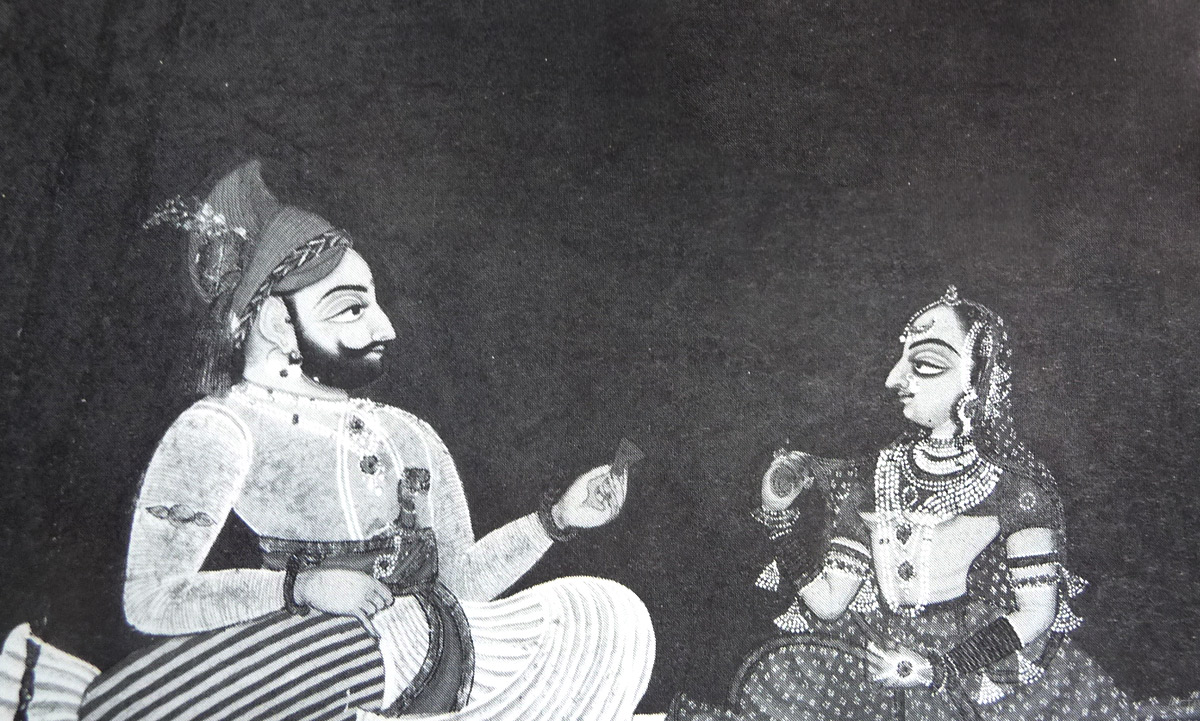
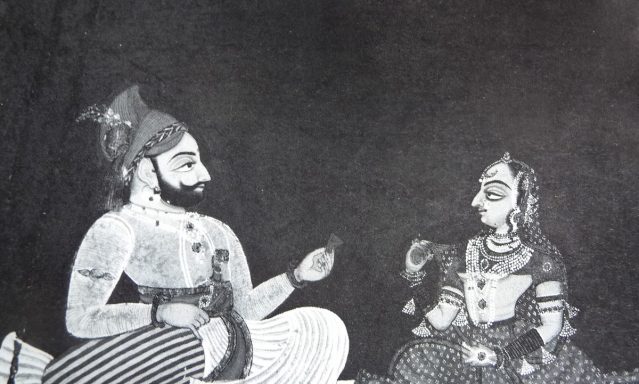
A Rajput warrior gazes back at you. Pearls drape across his chest. Emeralds sparkle from his turban. Gold earrings hang from his ears. His wrists are covered with Kadas, rings adorn his fingers, and a jewelled dagger rests at his waist.
Now imagine a modern Indian office.
Most men wear a shirt, trousers, a belt, and perhaps a wristwatch.
Somewhere between these two images, something changed.
Today, if a man wears a necklace, a large earring, or multiple rings, people often notice. Some admire it; others question it. Jewellery has become associated primarily with women. Yet for most of Indian history, jewellery was never exclusively feminine.
The real question is not why Indian men are wearing jewellery again.
The more interesting question is: when did they stop?
Let us go back first. Look closely at any ancient Indian sculpture at Sanchi, at Khajuraho, at the great cave temples of Ellora, at the painted ceilings of Ajanta. Look at the men: the warriors, the kings, the common figures at the periphery of a composition, the gods themselves. What you will find, consistently and without apology, is jewellery. This was not decoration applied to make a figure look festive. This was how Indian men looked for thousands of years, across every region and every social stratum when they were simply being themselves.
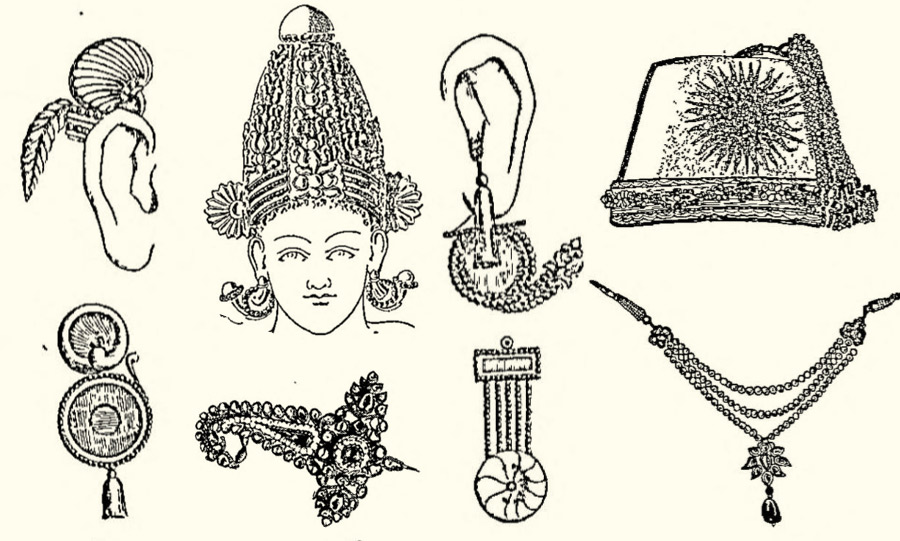
Not only people, but our gods also adorned themselves with a variety of jewellery, and they too were associated with specific designs. Lord Vishnu, for example, wears the distinctive makara-kundala crocodile-shaped earrings as an essential part of his iconographic identity. The Kaustubha gem hangs on his chest; the Srivatsa mark sits beside it. To sculpt Vishnu without these ornaments would have been theologically incorrect. The jewellery was not decoration. It was part of what made him Vishnu.
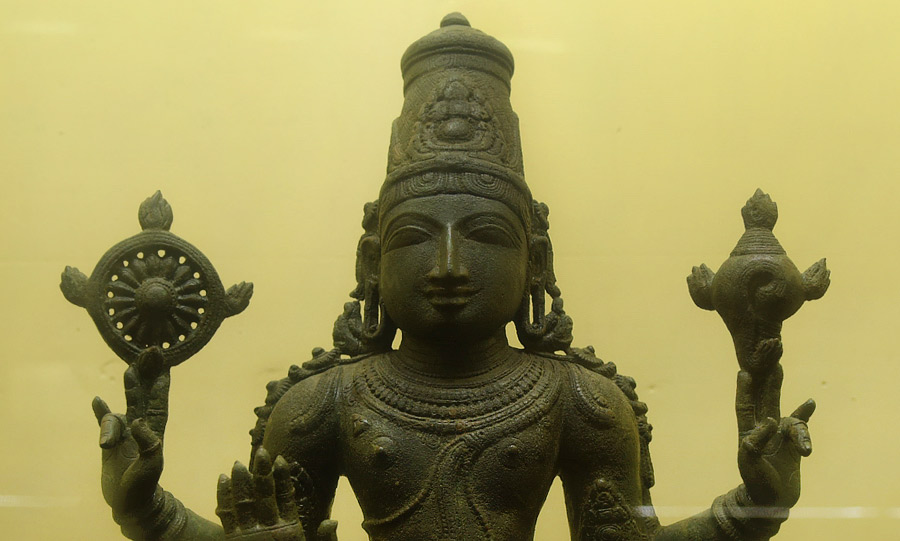
Shiva wears the sarpa-kundala cobra-shaped earrings on ears that represent both masculine and feminine energy in balance. Surya, the sun god, rides his chariot wearing a magnificent kirita-mukuta (crown) and armlets that extend from shoulder to wrist. The male divine in India was, without exception, an ornamented being. And the mortals who worshipped these gods dressed in their image not as a fashion statement, but as a spiritual alignment.
Monidipa Bose Dey writes in Jewellery in Indian Iconography (2020): “Our deities and our temple art are a documentation of our ancestors and depict their socio-religious customs, lifestyles, and the general way of living. The jewellery we see on our deities is what the people of those times wore and what was in fashion.“
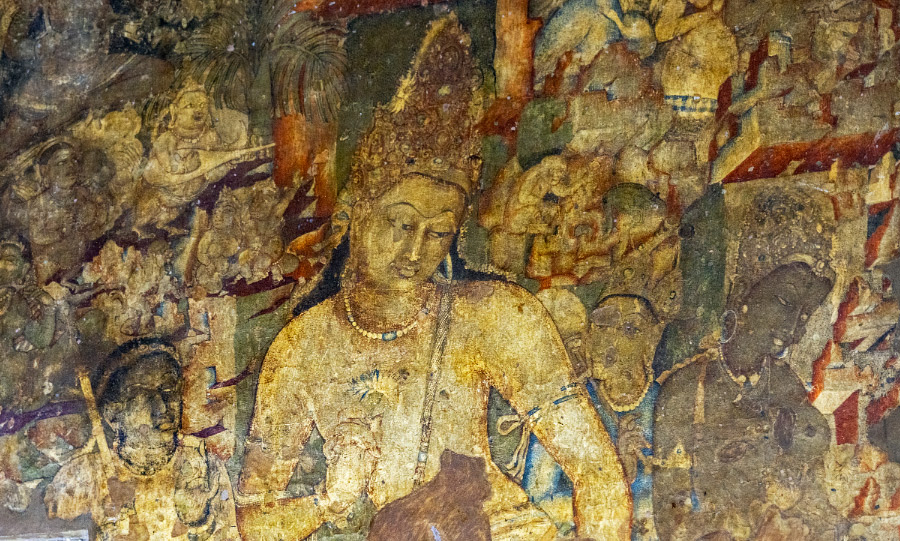
The Ajanta cave paintings, spanning the 2nd century BCE to the 6th century CE, depict male figures in court scenes, battle scenes, and domestic settings wearing layered jewellery indistinguishable in complexity from what the women beside them wear. The Hoysala temple sculptures of the 11th to 14th centuries are so densely ornamented, across male and female figures alike, that the sheer quantity of jewellery carved in stone speaks to how central adornment was to how people understood themselves.
A Portuguese traveller who visited the Vijayanagara Empire in the early 16th century described in his chronicles the dazzling jewellery worn by the people he encountered men and women, merchants and soldiers alike. The empire’s inscriptions recorded jewels gifted to temples in meticulous detail. For Vijayanagara, jewellery was civic, not personal.
The Silappadikaram and other Sangam literature describe a society where gold, pearls, and precious stones moved through commerce, gift-giving, and adornment across gender lines without remark. For the people who wrote and read these texts, a man with earrings was simply a man. There was no word that needed to be added, no category that needed to be managed.
The people of the land were not only expert in making and wearing jewellery they were also well aware of the properties of the materials involved. The Sanskrit words ratna and mani gems and jewels appear in the Vedas not as luxuries for the wealthy but as objects tied to cosmic order, divine favour, and the proper presentation of a human being before the world. The Arthashastra of Kautilya, written around the 3rd century BCE, contains an entire chapter on precious stones and their management within the royal treasury because a king without jewels was not simply underdressed. He was, in some important sense, incomplete.
When the Mughals arrived and established their own court culture across the subcontinent, they did not strip Indian men of their jewellery. They added to it. Mughal emperors were among the most elaborately adorned rulers in world history. Akbar, Jahangir, Shah Jahan miniature paintings from every reign show the emperor wearing multiple strands of pearl necklaces, large gem-set earrings, rings on every finger, and armlets and wristbands in gold and enamel. The Mughals brought with them Persian and Central Asian traditions of kundan and jadau stone-setting techniques that produced some of the most technically sophisticated jewellery in the world and these techniques were deployed fully and equally across the adornment of men.
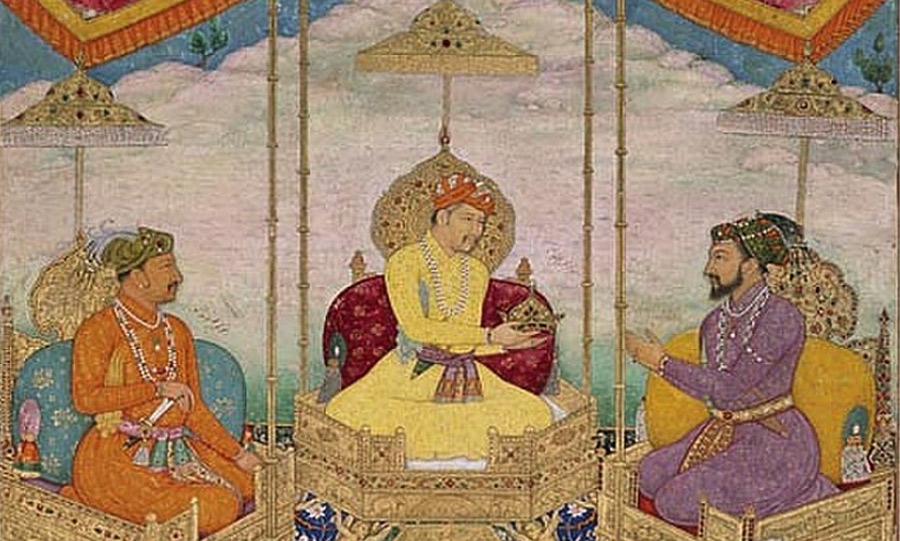
In South India, the kings of Mysore, Travancore, and Tanjore maintained elaborate jewellery traditions for male royalty. In the northeast, tribal male jewellery traditions carried their own deep grammar of meaning. In Rajputana, the warrior kings wore specific jewels as marks of rank and lineage the jewellery was as heraldic as a coat of arms.
And then, somewhere in the 18th and 19th centuries, almost all of it was quietly put away. Not gradually, the way fashions usually shift but quickly. Within a generation or two, the Indian man emerged from the colonial encounter as someone who wore, at most, a watch, a ring, perhaps a religious thread. The rest was gone. Declared, by a logic imported from somewhere else entirely, to be feminine. To be excessive. To be somehow not quite right for a serious man.
The question worth asking is not why Indian men stopped wearing jewellery. The question is: who decided they should?
The British who came to India in the 17th and 18th centuries brought with them a specific idea of what a respectable man looked like. This idea had been shaped by Protestant Reformation values in Europe, by the rise of a merchant and professional class that distinguished itself from aristocratic excess, and decisively by Victorian-era masculinity, which had arrived at the conclusion that a serious man did not adorn himself. Gold on a man’s body, in the Victorian moral framework, was associated with vanity, with effeminacy, with the aristocratic overindulgence that the emerging professional classes defined themselves against. A gentleman wore a dark suit. A gentleman wore a watch. Jewellery beyond a signet ring and a pocket watch was not something a serious man needed.
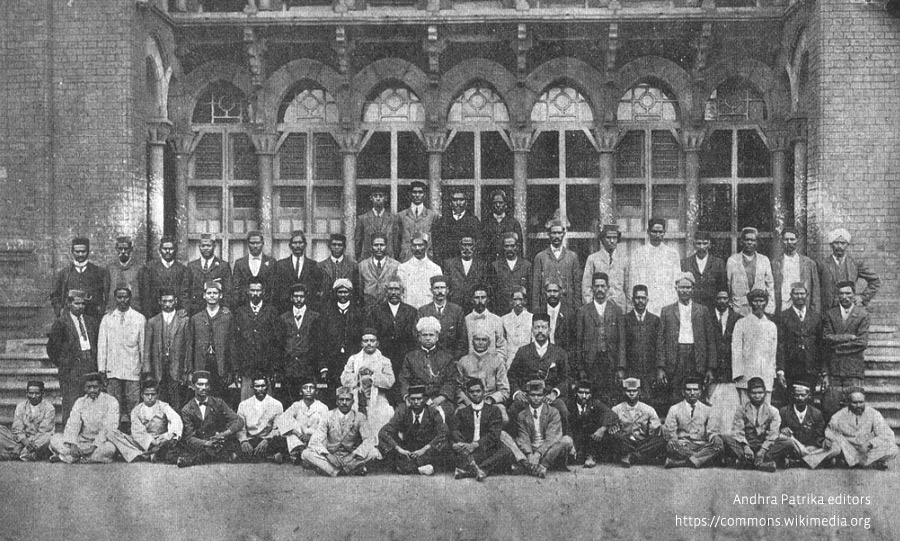
This was not simply a fashion preference. It was encoded in the broader ideology of colonialism the idea that the British way of doing things was the civilised way, and that Indian practices that diverged from it were signs of backwardness requiring correction. Indian men who aspired to positions within the colonial administration, who sought employment in British firms, who wanted to be taken seriously by the institutions that now controlled access to power, found that dressing in the British mode was part of the price of admission. And the British mode, for men, meant putting the jewellery away.
“British clothing was seen as superior, symbolising modernity and progress, while Indian dress became associated with tradition, backwardness, or excess. The suit became the grammar of seriousness.” Research on colonial dressing norms, ResearchGate (2024)
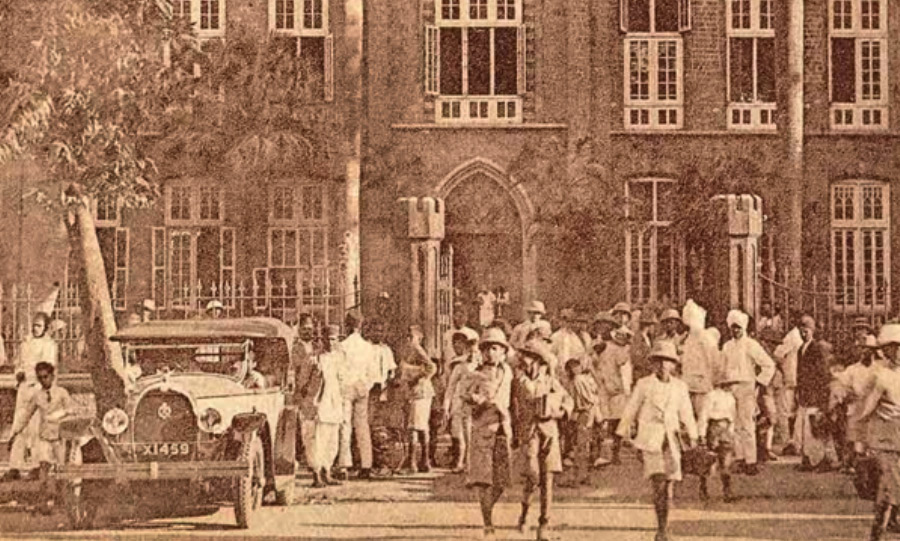
The English-medium schools that the British established across India carried this logic into the next generation. The school uniform modelled on British institutional dress was the first place where Indian boys learned, systematically, that certain things were not for them. No earrings. No jewellery beyond what was religiously mandatory. The daily reiteration of this uniform, year after year, across millions of boys, accomplished something that no explicit law could have: it made the earring feel like something that needed an explanation. Where before it had been so ordinary as to be unremarkable, it now became marked a choice that required justification, that invited a second look.
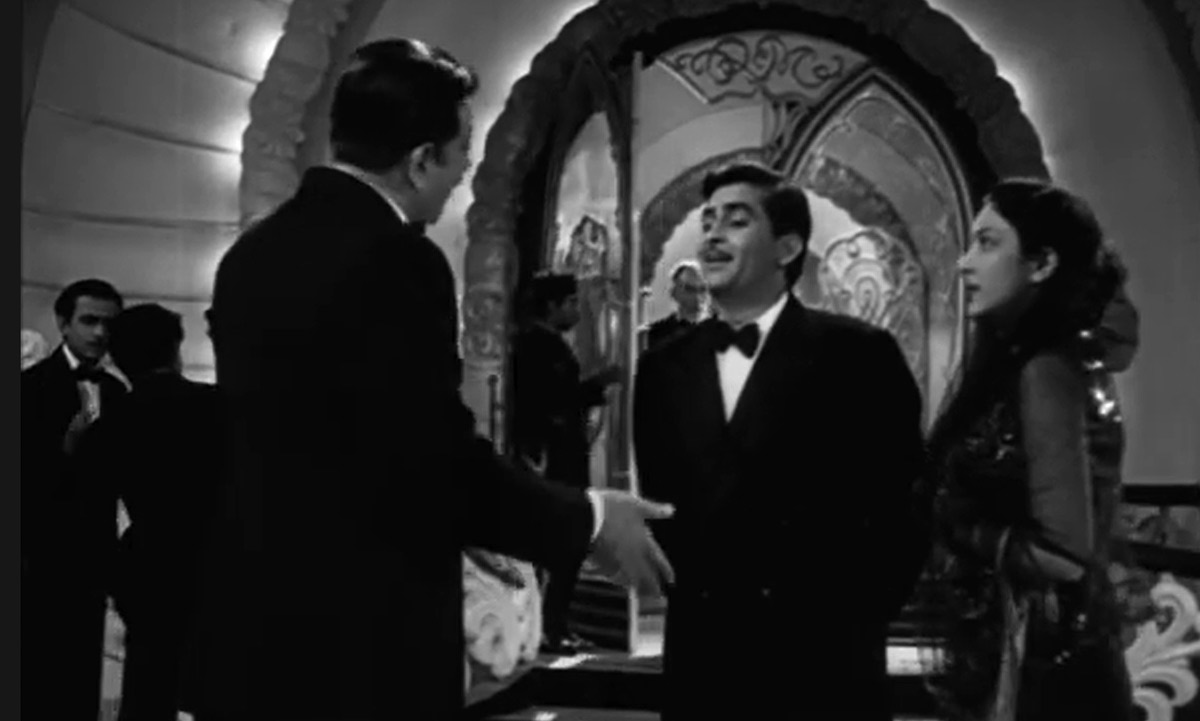
Indian cinema played its own role in cementing this hierarchy. For decades, the aspirational hero the educated man, the romantic lead, the figure the audience was meant to admire and identify with appeared in Western dress. The dhoti and kurta, meanwhile, were quietly relegated to a different kind of character: the comic figure, the villager, the man who had not yet arrived. This was not accidental. It was a consistent visual grammar, repeated across hundreds of films over generations, that taught audiences to associate traditional Indian dress with backwardness and Western dress with sophistication and desirability. And because jewellery had evolved aesthetically alongside traditional Indian clothing the two developing together over centuries into a coherent visual language when men abandoned the dress, the jewellery began to look strange as well.
This is worth pausing on. A kamarbandh looks exactly right on an angarakha or a dhoti. It looks incongruous on trousers and a shirt not because the object has changed, but because the visual language no longer matches. The jewellery did not become odd. The context around it changed. When men changed what they wore, the jewellery lost the grammar it belonged to, and without that grammar, it became easy to dismiss.
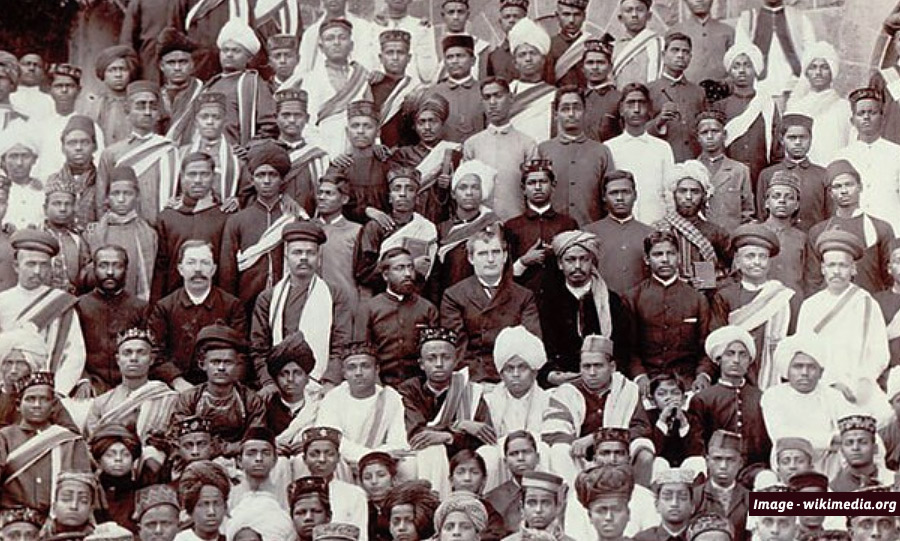
Two centuries of this pressure through schools, through workplaces, through the aspirational model of the educated Indian professional were enough to accomplish something remarkable: the erasure, from mainstream Indian male culture, of a tradition that had persisted continuously for at least five thousand years.
The erasure was not complete. It was urban, upper-caste, and aspirationally Western. Away from the centres of colonial influence, male jewellery traditions persisted with full vigour and continue today. Tribal communities across Jharkhand, Chhattisgarh, Nagaland, Manipur, and Rajasthan maintain male jewellery traditions that were simply never interrupted because the colonial aspiration never fully reached them, or because the jewellery was so deeply embedded in ritual identity that no borrowed ideology could dislodge it. In these communities, a man’s earrings or neck pieces are not statements. They are facts.
Certain religious traditions also held firm. The kundala the earring remained a mark of devotion for followers of specific traditions: Shaiva ascetics, certain Vaishnava communities, maratha of pune, and Sikh men whose tradition included specific adornments as part of religious identity. The sacred thread, the rudraksha necklace, the kara bracelet these survived because they were framed as religious rather than decorative, a distinction that the colonial framework found easier to accommodate.
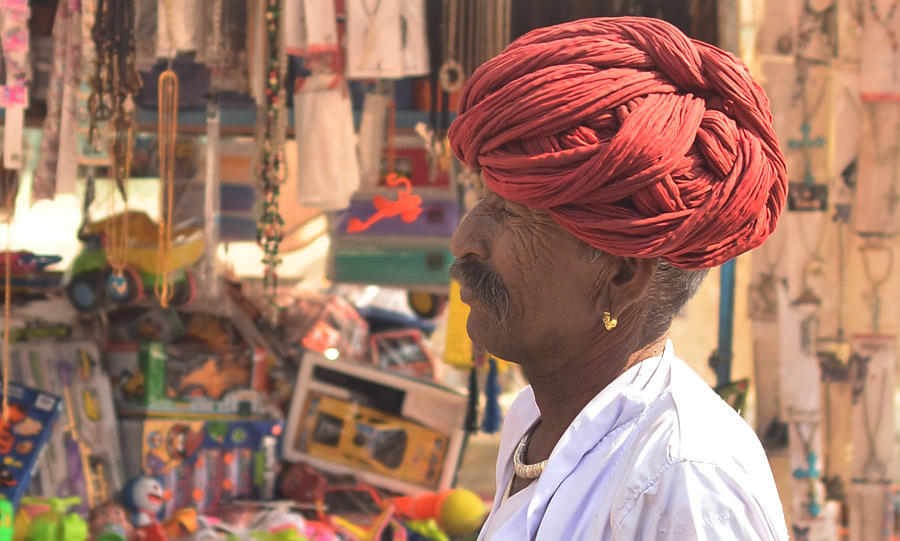
And the craft traditions that made male jewellery the goldsmiths of Rajasthan, the brass-casters of Bastar, the silver workers of Kutch continued working. They made earrings for women when men stopped asking for them. The skills did not disappear. The demand shifted.
Something interesting happened in the space left behind by jewellery: the watch moved in. The mechanical watch, a European technology, became in colonial and post-colonial India the only universally accepted male accessory. It was functional, which made it defensible. It was European, which made it aspirational. It was worn on the wrist, which was at least adjacent to where bangles had always been worn. The watch became the one ornament that Indian men could wear without their masculinity being questioned precisely because it had arrived with the people who were doing the questioning.
Today, forget the kamarbandh or bajuband even when an Indian man wears a necklace or an earring in an ordinary social context not at a festival, not as part of a costume, not in a film something uncomfortable often happens. People look. They form an opinion. They may say nothing, but the slight shift in how they position themselves, the pause before responding, the specific texture of their gaze, communicates something clearly: you are doing something that requires explanation. The irony is that the same men who attract that gaze are celebrated as royal and thoroughly masculine when they wear elaborate jewellery at a wedding. Yet in everyday style, even a simple piece can be enough to invite the suggestion of femininity.
This gaze has no historical basis in India. It arrived with colonialism, embedded itself in institutions, and became so naturalised over two generations that most people who hold it today have no idea where it came from. They experience it as common sense as something that has always been true about what men wear and what they do not. But it is not common sense. It is a colonial imposition that became a social norm. The man with the earring is, in the longer view of Indian history, the normal one. The man who stares at him is the recent arrival.