Why Old Kitchens Feel Like Home
It lived in recipes remembered without measurement.
It lived in the well that still served the house.
It lived in clay roof tiles that continued to shelter generations.
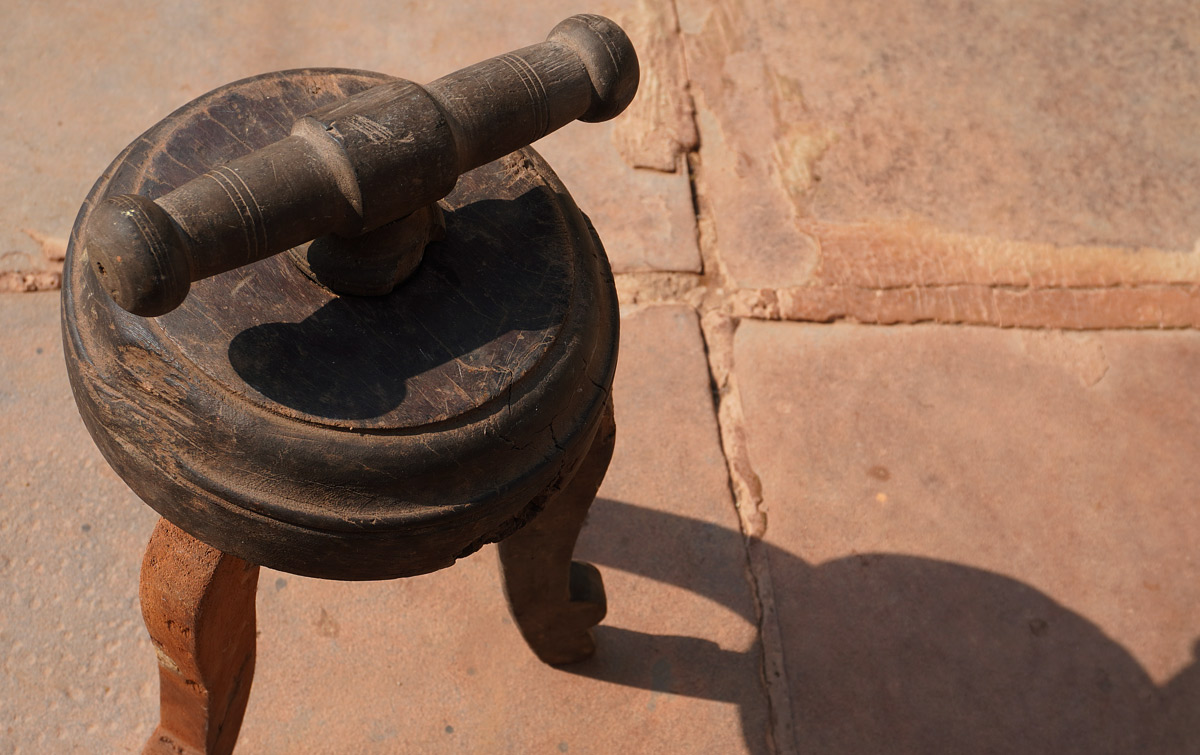
It lived in old kitchen tools tucked carefully into corners.
It lived in the smell of wood smoke at dawn.
It lived in the ‘fulancha sada’ beneath the ‘parijaat’ tree.
I never noticed it as a child. It was simply the way things were. It was only after leaving, and returning again and again over the years, that I began to understand what had been there all along.
There are some places that do not need directions. Your body remembers them long before your mind does. For me, that place is a quiet town in Konkan nestled among the lush green foothills of the Sahyadris, where mango orchards, coconut groves, and centuries-old homes shape the landscape as naturally as the monsoon rains.
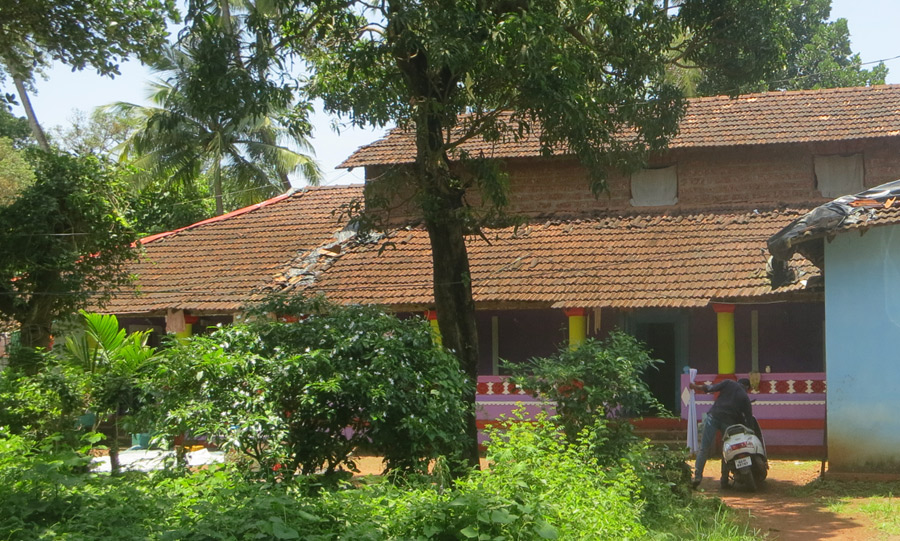
My family’s ancestral home stands there, much as it has for generations, situated amidst the dense green landscape of the Konkan coast. I try and visit it at least two or three times every year, yet every visit feels like a homecoming of a different kind. Not because the house changes, but because each time I return, I notice something I had overlooked before.
This summer, what stayed with me was not a grand event or a family gathering. It was a morning. A simple morning in Konkan.
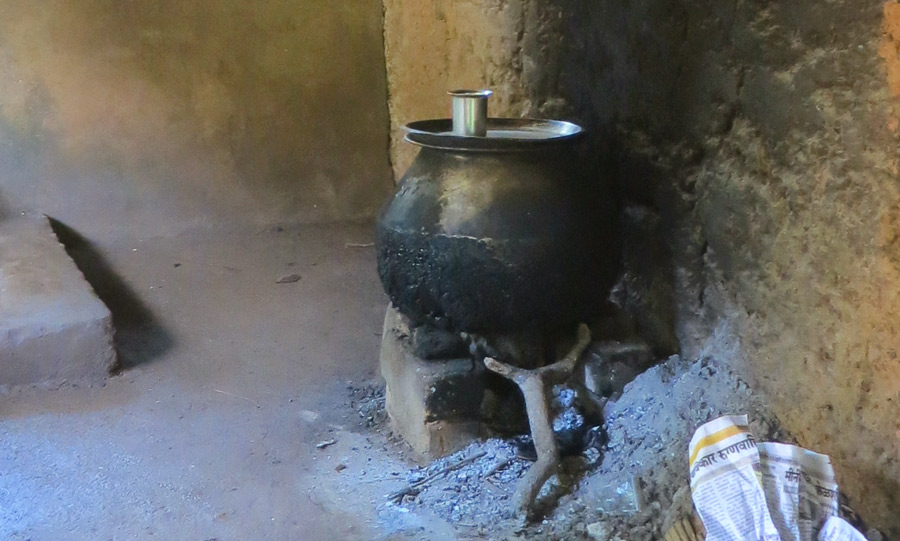
I woke up to the sunrise, that unlike our cities felt untouched by hurry. The air carried the scent of ‘oli maati’- the unmistakable fragrance of damp earth that seems unique to villages where the land is still allowed to breathe. In our backyard, the ‘chuul’ had already been lit to heat water for the morning bath, and the comforting smell of burning wood drifted through the morning summer air.
The temple next to our house had already awakened. Its bell rang through the stillness of the morning.
And beneath the ‘Parijaat’ tree lay a carpet of fallen flowers. Delicate white petals with saffron stems scattered across the ground as though the tree had quietly offered its morning prayers before everyone else had awakened.
Standing there, I realised that silence in Konkan is never truly silent. It is filled with sounds that belong to the land itself.
The house has witnessed generations before me. Its sloping roof is covered with traditional clay ‘kaulas’ that have weathered countless monsoons. A stone well stands proudly in front, as it always has, holding stories older than anyone living there today.
The more time I spent there, the more the house began revealing itself.
The kitchen was where I found them.
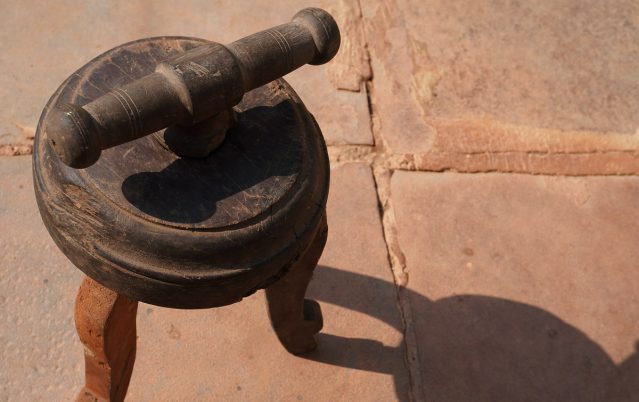
One afternoon, while looking for a glass of water, I noticed an old ‘vili’ hanging from a beam. A cast-iron pan blackened from years of use and a copper ‘pedavan’ sat quietly on a shelf. In another corner rested the ‘pata-varvanta’, its stone surface smooth from decades of grinding. Later, tucked away behind a stack of vessels, I found a wooden ‘paraat’.
Nobody pointed them out.
They simply existed as though they had always belonged there.
And perhaps they had.
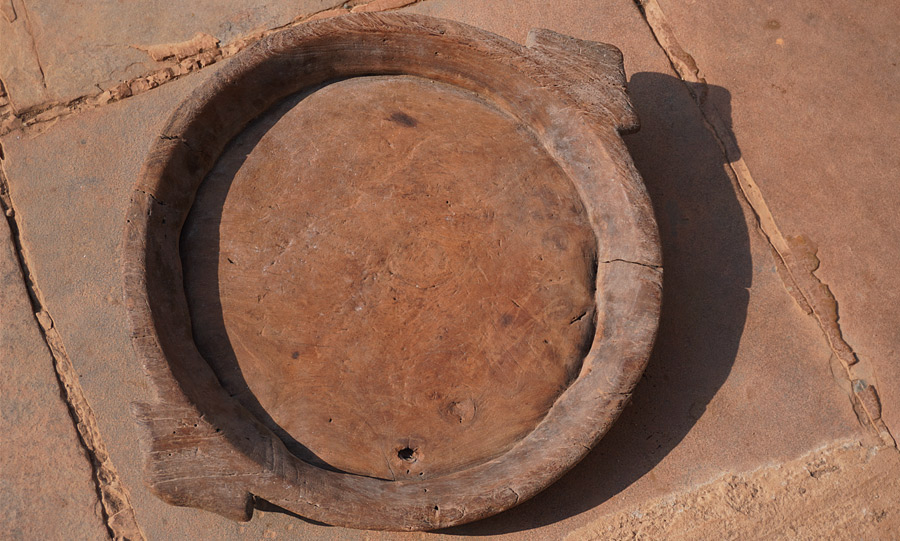
The ‘paraat’ was one of those objects that seemed to exist in every kitchen without anyone ever talking about it. Wide and worn from years of use, it sat quietly on a shelf until it was time to prepare a meal.
Most mornings began with hands moving through rice flour in the ‘paraat’, slowly bringing it together with warm water to form the dough for bhakris. There was a rhythm to it-pressing, folding, gathering the flour from the edges, that felt almost instinctive after years of repetition. Children watched from the side, occasionally sneaking a finger into the flour and being promptly shooed away.
“Khup juni asa ti.”
My Ajji glanced up briefly as she caught me examining the object.
It’s very old, she said.
Then she went back to what she was doing.
No story followed.
No exact date.
No dramatic family history.
Just those four words.
In that moment, I realised that not knowing its age somehow made it feel older. The ‘paraat’ had likely seen people whose names I would never know. It had lived through births, weddings, monsoons, festivals and ordinary Tuesdays.
The morning resumed. The sound of coconut being grated drifted from the kitchen while sunlight slowly crept across the chequered floor. Steel vessels dried upside down near the sink. Ajoba entered to take a glass of water. From the stove came the faint aroma of chai, still a few minutes away from being poured. Somewhere in the backyard, a broom swept fallen leaves into neat piles.
Life moved through that room constantly.
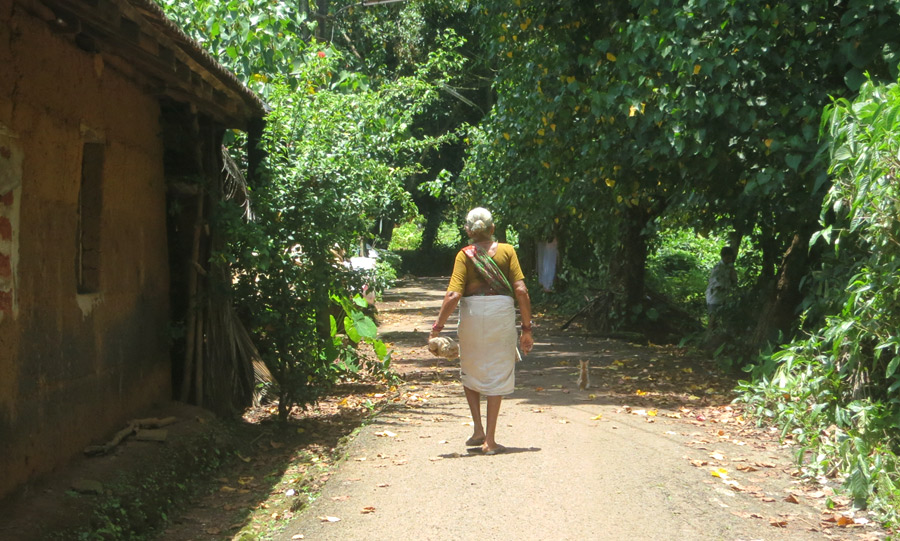
Outside, the first rays of sunlight had begun slipping through the areca and coconut trees.
Inside, Aaji sat near the ‘chuul’, occasionally nudging a piece of firewood further into the flame.
The smell of wood smoke mixed with coconut and freshly boiled tea.
A plate of ‘ghavne’ sat nearby.
I remember tearing off a piece while it was still warm.
Just breakfast.
The sort of breakfast that happens so often that nobody thinks to remember it.
And yet years later, it is exactly the sort of thing one remembers.
Another morning, the ‘shevgo’ had been brought out.
Aaji pressed the rice dough through it with practiced ease while I watched as I sat on the stairs that led to the pantry room in the kitchen.
Thin strands of ‘shirvale’ emerged from the bottom, collecting neatly onto a plate.
There was something hypnotic about it.
The only thing that seemed important was getting the ‘shirvale’ just right.
By the time ‘narlacha ras’ was poured over it, the entire kitchen smelled faintly sweet.
I must have eaten two bowls.
Perhaps three.
Nobody was counting.
One afternoon, Kaki was preparing ‘Patoli’.
Fresh turmeric leaves sat on the ground.
I sat beside her, more interested in watching than helping.
She spread the rice batter with the back of a spoon, added coconut and jaggery, folded the leaf and set it aside.
Then another.
And another.
And another.
The movements were so natural that it seemed as though her hands remembered the process on their own.
The ‘pedavan’ steamed quietly in the corner.
Slowly, the fragrance of turmeric leaves began travelling through the house.
Through the kitchen.
Across the house.
Into the ‘khala’.
The funny thing about ‘Patoli’ is that nobody needs to announce when it is ready.
The smell tells everyone.
Before long everyone began appearing one by one, drawn in by nothing more than memory and aroma.
More than once, I found myself being sent outside in the middle of cooking. “Zaraso kadipatto gheun ye go.” A few minutes later I would return with a handful of fresh curry leaves plucked straight from the plant behind the house. They travelled perhaps twenty steps from shrub to pan, releasing their fragrance the moment they hit the hot oil.
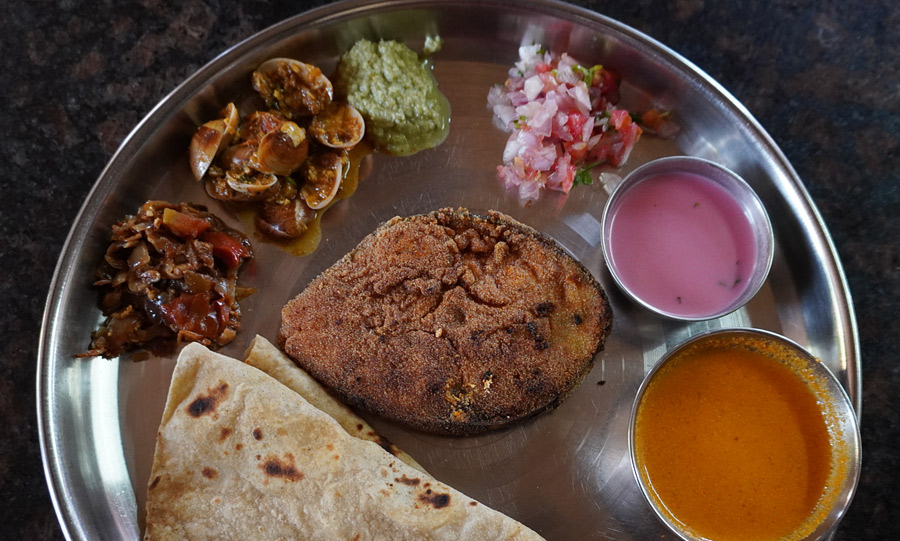
Lunch was rarely a formal affair. Steel plates were laid out on the floor with everyone seated cross-legged in a neat row as the meal would be served. Rice would arrive first, followed by fish of some sort, vegetables, and eventually a steel tumbler of chilled sol kadhi whose sides had already begun collecting droplets of water from the heat. Among us younger cousins, however, it had long been rebranded as soul kadhi, a name that sounded ridiculous until the first sip hit after a hot afternoon and somehow managed to cool something deeper than just your thirst.
Then there were the mangoes.
The Hapus season arrives like an old friend in Konkan.
By afternoon, mangoes from our own orchard would be carried upstairs to a room dedicated entirely to them. During the season, it would be filled wall to wall with Hapus mangoes, some destined to be sold while some meant as gifts to family and friends. Their fragrance filled not just the room but the entire house. You could smell them before you saw them.
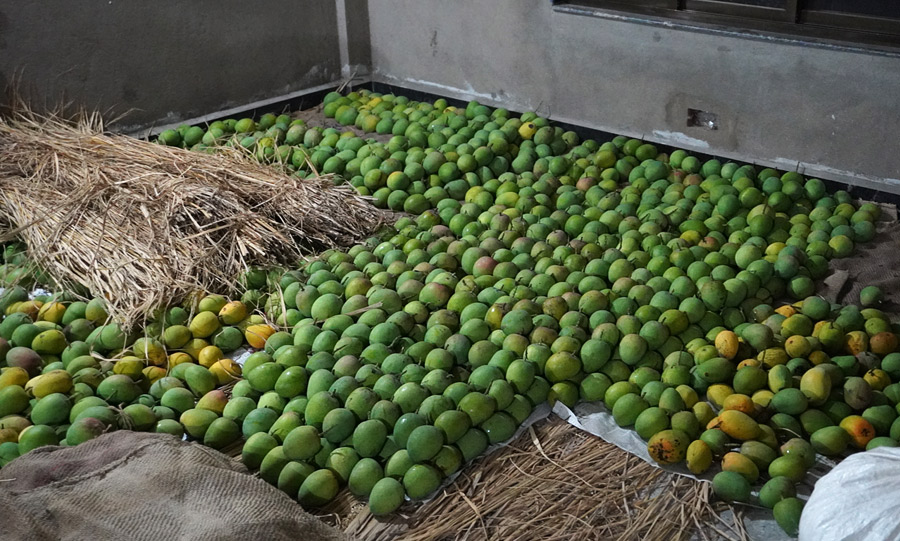
Later, we would sit in the ‘khala’ eating them together.
The juice would inevitably drip onto our hands.
Kids complaining that another person had taken the biggest one.
Kaka would always insist that the sweetest mangoes came from a particular tree.
The same arguments returned every summer.
So did the same laughter.
The more I paid attention, the more I realised that these objects had never belonged to a single purpose.
The ‘vili’ that sliced vegetables in the morning would be brought out again to scrape coconuts for lunch. The wooden ‘paraat’ that helped shape bhakri dough would later hold rows of freshly rolled ladoos as they cooled before being stored away in steel dabbas. The ‘pedavan’ steamed patoli and modaks during festivals and found its way back into everyday cooking once the celebrations were over.
Nothing was specialised. Nothing was disposable.
Each object adapted itself to the needs of the household, carrying out dozens of small tasks across decades of use.
What stayed with me most was how naturally they belonged to the space around them.
In city kitchens, utensils often compete for space. Pulling out one vessel usually means disturbing three others. Drawers rattle. Shelves overflow. Things are stacked because there is nowhere else to keep them.
But in this kitchen, every object seemed to know exactly where it belonged.
These objects had witnessed far more of this home than I ever could. They had been present for meals, festivals, monsoons, celebrations and countless ordinary days in between. They had outlasted generations.
Perhaps that is the true mark of good design and craftsmanship. Not that an object survives untouched, but that it remains useful across generations. These tools were never created to be temporary. They were built with the expectation that they would be used, worn, repaired and used again.
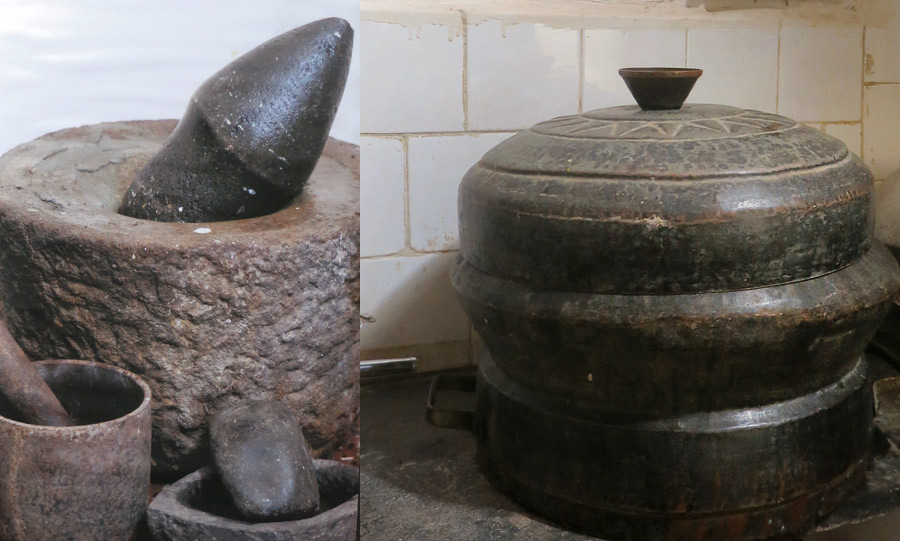
Unlike many modern objects that are replaced at the first sign of damage, these pieces offered something increasingly rare: the freedom to renew. A loose handle could be fixed. A worn surface could be restored. Their value did not diminish with age; if anything, it deepened.
Over time, the marks of use became part of their story. Every scratch, stain and repair stood as evidence not of decline, but of a life well lived. In that sense, longevity was never simply a matter of durability. It was the result of thoughtful design, skilled craftsmanship and the belief that some things are worth preserving.
Every time I leave Konkan, I carry photographs home with me.
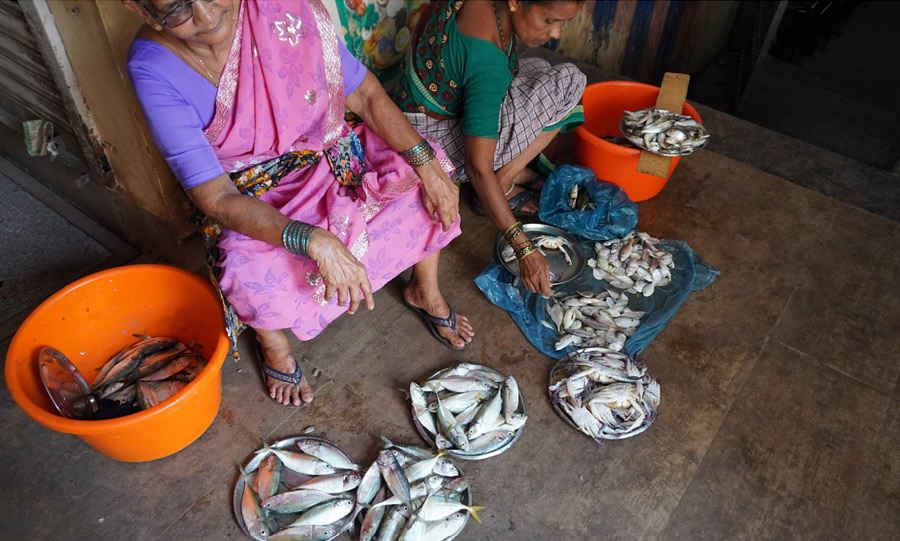
Photographs of the house.
Of trees heavy with fruit.
Of the bazaars of my village.
And perhaps, textures too.
Because what I find myself missing is not just what I saw, but what I felt. In our cities, everything seems to be getting slippery the floors, the walls, the furniture even our relationships with one another. But places like these remind me of the value of texture; in objects that bear the marks of use, in traditions that have been repeated for generations, and in relationships that deepen with time rather than wear away.
Yet what stays with me long after the photographs are forgotten is a feeling. A feeling of belonging.
Sometimes I think that while the rest of us merely pass through, these objects remain. We arrive, we leave, we move away and return years later. Yet the ‘vili’ still hangs where it always has. The ‘paraat’ still waits on its shelf. The well still serves the house.
They are the quiet custodians of memory.
The permanent residents.
Everything else, including me, is simply passing through.
~