अभिनन्दन from Gaatha

Gaatha project was originally conjured only for researching and documenting the rapid erosion of Indian craft clusters and heritage. However, we soon learnt from the artisans themselves that need was not to do research alone, but to restore ‘pride and serious commercial opportunity’ in their ecosystem. Today Gaatha thus aims to bring the lost respect and wealth back to these beautiful and aesthetically rich Indian handicraft clusters. These researches are important because just like Industrial goods sell on ‘features’, crafts sell on the processes / stories / heritage that go into making them.

We should give crafts a fair chance, someone is right now merrily making something for us, singing a folk song, in a humble house, deep inside India.

Buy: Indian Handicrafts Online
Research & Archive: Indian Crafts
Story of Indian crafts and craftsmen
  • About Us
    • Who we are
    • What We do
      • Research & Archive
      • Consultancy & Design
      • Curation & Commerce
    • Be a Part
    • Contact Us
  • |
  • Discover
  • Experience
  • Shop
  • |
  • Must Explore
    • Khichdi | Indian Words
    • Know Your Native
    • Hands of Handmade
    • Indian Tribal folklore
    • Uncommon Sense
Story of Indian crafts and craftsmen
  • About Us
    • Who we are
    • What we do
      • Research & Archive
      • Consultancy & Design
      • Curation & Commerce
    • Be a part
    • Contact Us
  • Discover
  • Experience
  • Shop
  • Must explore
    • Indian Words | Etymology
    • Know Your Native (INDIAN TRIBE)
    • Hands Of Handmade
    • UNCOMMON SENSE

Tag: shop handicraft

14Oct

Shop Online

8 Likes
1 min read
2 Views

About Gaatha

Gaatha brings to you, traditional handicrafts and the culture behind them, directly from the very home of the Indian artisan.
Gaatha
subscribe image background

Shop Online

Categories

  • Articles (112)
  • Crafted with Love (1)
  • Craftsmen (23)
  • Dialogues (5)
  • Events (3)
  • Hands on (3)
  • Indigenous Knowledge (2)
  • Myths & Stories (20)
  • People / Organization (2)
  • Podcast (2)
  • Post Card (3)
  • Process (118)
  • Products (9)
  • Resource (8)
  • Tale (164)
  • Visits (21)

gaatha.handicrafts

Shop | Handmade treasures from the heart of India
Discover | Woven narratives through craft documentation

Draped in the grace of Maheshwari silk, she carrie Draped in the grace of Maheshwari silk, she carries a legacy of resilience. Her presence celebrates a journey where patience prevails and the beauty of life unfolds with every passing moment. 
~
#handloomsaree #silksarees #sareelove #gaathahandicrafts #handloomlove
Since ages, I have been living in India, even befo Since ages, I have been living in India, even before you arrived.
My roots hang down like the dreadlocked hair of a yogi.  Sitting beneath me in the Indian heat brings a quiet, pleasant relief. My wide shade welcomes everyone. Travellers, traders, wanderers, and children have all rested here. People know me as Vad or Vat Vriksha. My scientific name is Ficus benghalensis.  In Hindu belief, I am sometimes associated with Yama, and in folklore I am also believed to be an abode of spirits. At the same time, I represent spiritual aspiration and the idea of immortality.  Visually I am hard to ignore, and over the centuries I have heard countless important conversations. My shade offers space for people to sit, talk, and gather. The city of Vadodara is believed to derive its name from me, from the word Vatodar, meaning “in the heart of the Vad.”  It is also said that the Bombay Stock Exchange, one of Asia’s oldest stock exchanges, began under a banyan tree in Mumbai, where traders once gathered to do business.  An interesting twist came to my name when traders from the Portuguese Empire arrived in India. They often saw Baniyas or Vaniyas, members of trading communities, sitting beneath my shade discussing deals. Seeing this again and again, they began calling me the “Baniya tree.”  Over time, the name changed, and I came to be known as the Banyan tree.  But this is only the story of a name. Like any other tree, I make no difference between humans, birds, animals, or even insects. Everyone is welcome beneath my shade.
~
#etymology #gaathahandicrafts #storytelling #indianculture #banyantree
Add a touch of artistry to your ensemble with this Add a touch of artistry to your ensemble with this exquisite, hand-embroidered pomegranate brooch. Meticulously crafted on soft felt, it features vibrant threading and shimmering beadwork to represent lush seeds. This one-of-a-kind statement piece blends traditional craftsmanship with timeless symbolism, making it a perfect gift or personal treasure.  #jewerly #handembroidered #gaatha #uniquejewellery
A beautifully aged textile adorned with dense, col A beautifully aged textile adorned with dense, colourful embroidery. Its textured surface and lively palette make it a striking statement décor piece.🌺
~
Link in Bio~
I am one of the most celebrated grains in the worl I am one of the most celebrated grains in the world, though I do not know exactly where I was born.  In ancient Sanskrit, I was known as “व्रीहि” (vrihi), one of the earliest Vedic words used for rice. The word is extremely old and may reflect deep South Asian linguistic roots. Some scholars also connect me with the Tamil word “arisi”, meaning husked rice.  As people travelled and trade expanded westward, my name began to change. In early Iranian languages new variations appeared. Later in Persian I was called brizi, and in the Pashto language I became known as vrize. With every region I passed through, my name slowly transformed.  My journey reached the Greek world during the campaigns of Alexander the Great in the 4th century BCE. The philosopher Theophrastus wrote me as oryza. From there the word entered the Latin world, where it was also known as oryza. Even my scientific name today, Oryza sativa, carries that ancient Greek connection.  As I travelled further into Europe, my name kept changing. In Italy I became riso, in France I was called riz, and eventually in England I came to be known as rice.  Like the grain itself, my name travelled across empires, trade routes, and cultures, carrying centuries of history within a single simple word.🍚  ~
#rice #etymology #gaathahandicrafts #storytelling #indianculture
The most common thing we hear during Holi is, “Bur The most common thing we hear during Holi is, “Bura na mano, Holi hai.” But have you ever wondered why we even have to say that?  Is it because we throw water on someone without asking? Or because of the harsh chemical colours that are so difficult to remove later? Sometimes we need strong soaps and even scrubbers to clean them off.  In earlier days, people used only natural colours. Red sandalwood powder, marigold flowers, tesu flowers, dried beetroot, amla and many more. These colours carried a natural fragrance and were actually good for the skin.  So perhaps “bura na mano, Holi hai” is a much newer idea.  The main colours people used were:  Red – from red sandalwood powder, pomegranate, or madder tree
Yellow – from turmeric or marigold flowers
Orange – from tesu flowers
Green – from henna, dried gulmohur leaves, or spinach
Blue – from indigo leaves or jacaranda flowers
Brown – from katha or dried tea leaves
Black – from dried amla  What a healthy and beautiful Holi it must have been.  Happy Holi 🌸  #holi #naturalcolors #ecofriendly #gaathahandicrafts
Before it reaches your wall, it begins on the floo Before it reaches your wall, it begins on the floor of an artisan’s home.
Cloth is prepared by hand. Natural pigments are mixed from scratch. A fine brush lays down lines that cannot be erased. Days pass in silence and focus.
Pattachitra is not produced. It is practiced.
Which is why no two pieces are ever identical, and why each one exists in limited numbers.
If this story belongs in your space, don’t wait too long.  🦚  Available now on shop.gaatha.com  #gaathahandicrafts #pattachitra #handicraft #wallart #painting
Before it reaches your wall, it begins on the floo Before it reaches your wall, it begins on the floor of an artisan’s home.
Cloth is prepared by hand. Natural pigments are mixed from scratch. A fine brush lays down lines that cannot be erased. Days pass in silence and focus.
Pattachitra is not produced. It is practiced.
Which is why no two pieces are ever identical, and why each one exists in limited numbers.
If this story belongs in your space, don’t wait too long.  🦚  Available now on shop.gaatha.com  #gaathahandicrafts #pattachitra #handicraft #wallart #painting
Follow on Instagram

Like Us On Facebook

Loading...

Trending

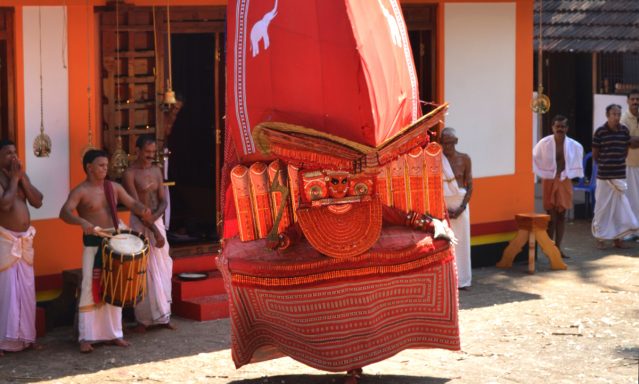
Indian Folk Theatre Masks: The Faces Behind India’s Ancient Storytelling

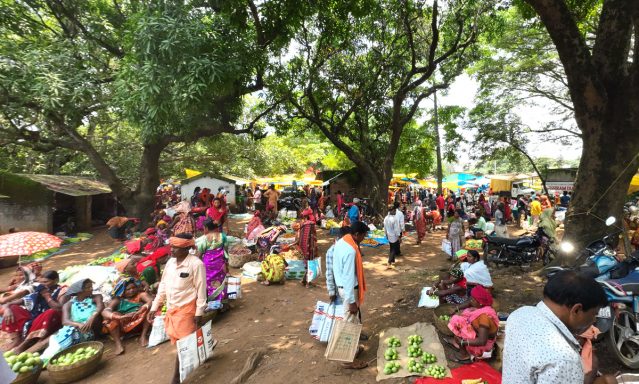
Order in Chaos ~ Indian Haat Bazaar

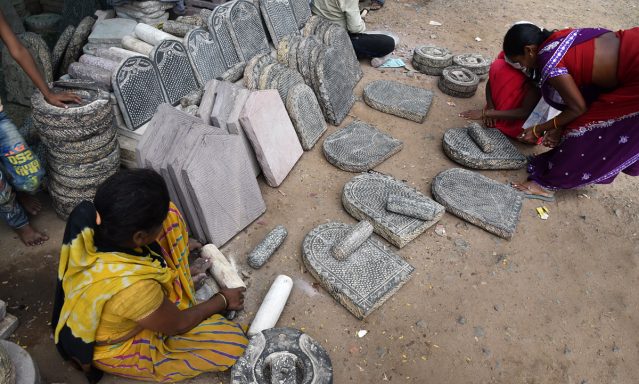
Sil Batta: The Stone That Remembers

Pattachitra | यात्रा की छाप

  • Facebook
  • Twitter
  • Pinterest
  • Instagram
Copyright Gaatha 2021