Order in Chaos ~ Indian Haat Bazaar
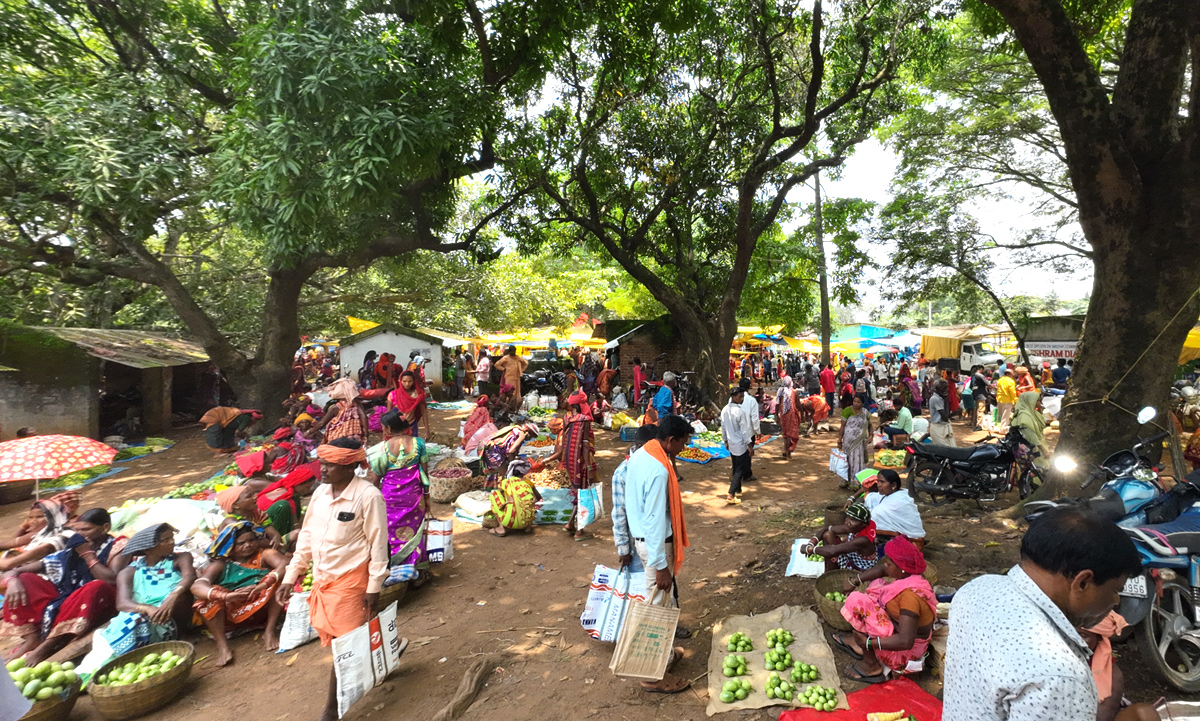
It is still dark, but the cock is shouting, calling the morning.
Today is Tuesday, a special day.
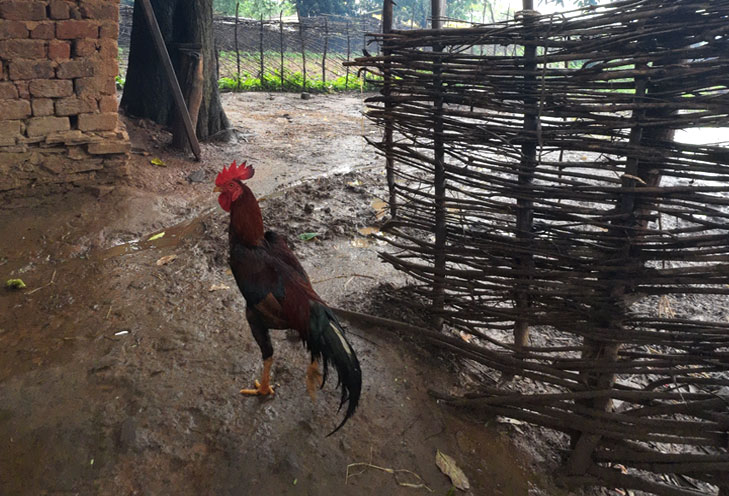
She wakes up early, takes a bath, packs some chana, and immediately rushes to her friend’s house. They greet each other with smiles and quiet excitement. Today, they are going to the weekly haat in a nearby village.
But they do not take the simple road.
Instead, they turn and walk into the forest.
Why the forest?
Because this is their bank.
A bank in the forest?
Yes. Bamboo shoots.
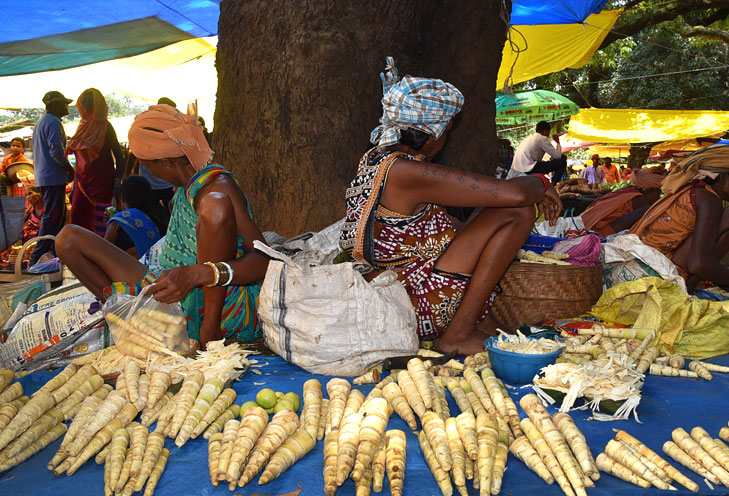
They collect bamboo shoots, sell them, and only then do they spend. After one hour of labour, their baskets feel full enough. It is time to move on.
They start walking towards the haat.
On the way, Malti explains to Kheermati what she needs to buy. Oil, salt, grain. They also talk about eating some sweets and drinking salpi, the local drink. They laugh at the thought.
Sometimes they walk quietly, listening to the forest. Sometimes they chat, sharing small stories and plans. Without even realising it, they cover the fifteen-kilometre distance.
And suddenly, they are there.
The haat bazaar.
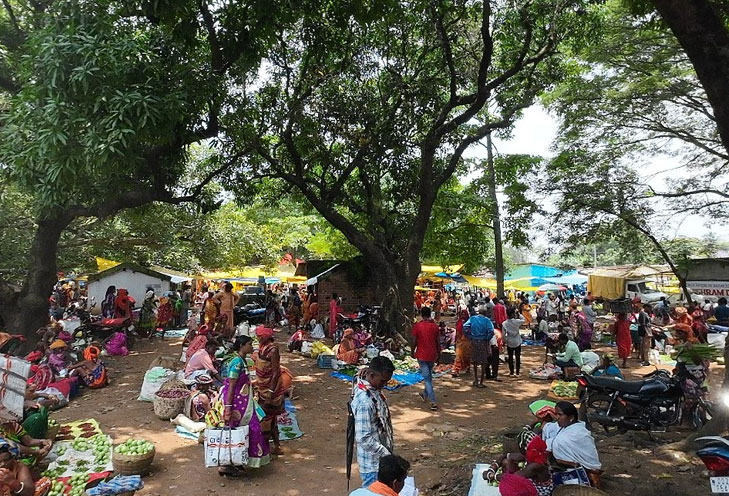
Noise, dust, people, animals, colours. Their day has just begun. Animals and humans move together, walking, stopping, negotiating, almost speaking the same language. Loudspeakers assert their presence, announcing offers, arrivals, and authority. At first glance, it feels overwhelming. It feels like chaos.
But pause for a moment. Why does it feel chaotic? Because there appears to be no visible order, no signage. Where to go now? Let us ask a local.
They are ready to help. With warmth and ease, they point and explain.
That corner has only bamboo products. Next to it is the cloth market. On your left are the kirana shops. Behind us is the vegetable market. At the far edge, where the ground opens up, is the animal market. This is not random. This is the weekly rhythm of life, carefully arranged to meet every essential need of people who walk miles to reach this place.
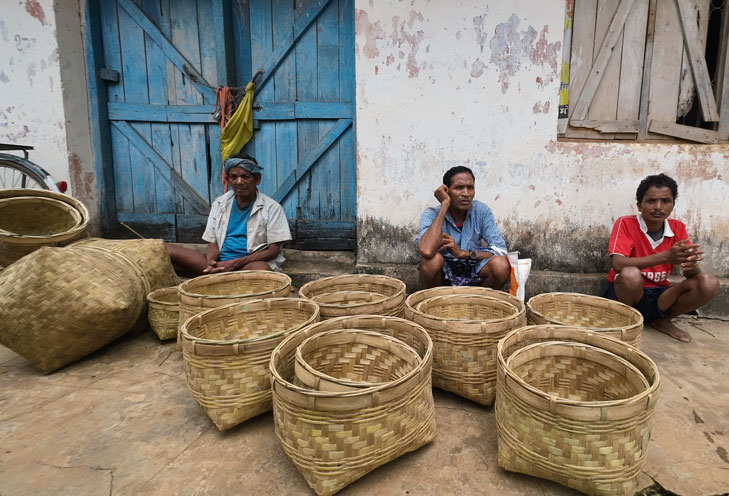
As you move slowly and begin to observe, you realise there is order within the chaos. Someone once said that order provides the stability we crave, but chaos creates the opportunities for change that we need. The haat bazaar is where both coexist. On the surface, it looks loud, restless, and disordered. In its depth, it is precise, functional, and deeply intelligent.
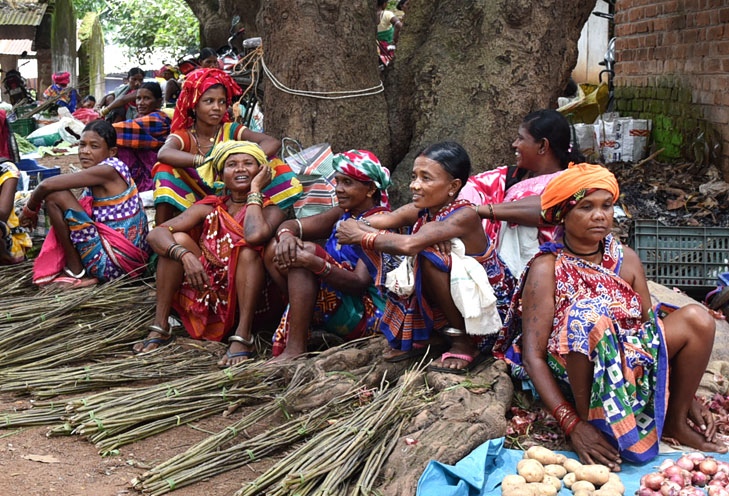
There is a clear balance between the number of men and women. We often say women love shopping, but here they are equally involved in selling. We meet Santa Devi, who lives deep inside the forest. Her surroundings are green, clean, and silent. This is luxury in its truest sense, the kind we often try to recreate in resorts and retreats. Her family depends on farming and the forest. She collects tree bark and makes ropes by hand. Six days of labour earn her one day of movement.
The haat is not just an exchange of goods. It is also social networking, physical and face to face, not on mobile screens. One person tells us that for locals, the haat is an important gathering. Some people attend two or three weekly haats in different locations. They never miss it. The haat is also a form of entertainment.
Entertainment? How?
He takes us behind an old wall. Cockfighting is going on. In different circles, men are shouting, betting, and watching closely. The energy is intense. Suddenly, after a minute or two of excitement, the crowd disperses and forms another circle somewhere else. We do not fully understand the rules, so we quietly return to the shopping area.
While walking back, the smell of bhajiyas catches our attention. By now, we are hungry. So we stop for bhajiya and chai. While talking to the seller, she tells us she does not have a permanent shop. Throughout the week, she travels to different locations and sets up her stall.
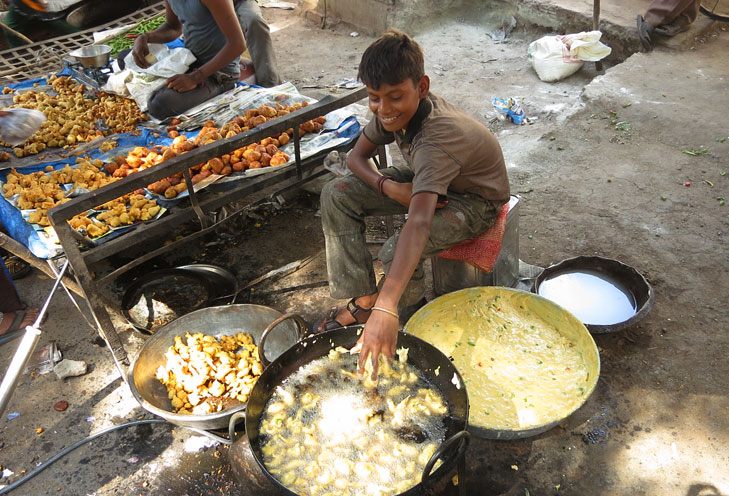
Out of curiosity, we ask her which community she belongs to. She smiles and says, “We are Baniya. Our surname is Gupta.”
Her family has been doing the same business for generations, without having a permanent space. You simply come and sit in the same spot at every haat. The location is stored in memory, like a mental map. No one interferes.
We see Malti and Kheermati arriving at Gupta ji’s shop as well. Both of them look happy. Within a few hours, they have sold everything. Now it is time for shopping, eating, and spending time with friends.
In urban settings, we identify products by their brand names. But in village haats, it is based on skills that represent different communities. We do not know since when such systems have existed, but we do know that trade like this has been happening for thousands of years. The Harappan and Mohenjo-daro civilisations also had haat-like market systems, far more developed than we often imagine.
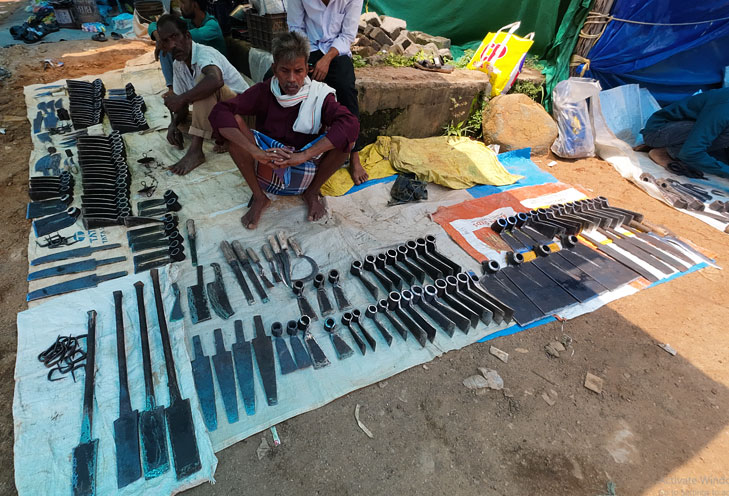
It is fascinating to imagine that many kingdoms came and went, but such systems are still functioning without infrastructure and with word-of-mouth marketing. In some places, haats happen outside the village, in others, on grounds inside the town. Everything starts in the morning and ends by evening. When you visit the same place the next day, it is hard to believe that a market existed there at all. It becomes just an empty ground or a playground. Haats do not require electricity. Shops sit directly on the ground. People carry their own shade, earlier canvas and now often plastic sheets. They appear like mushrooms and disappear just as quickly.
The haat offers a unique freedom to everyone. People can display or sell goods in whatever way they want. It is interesting to see combinations such as a bunch of vegetables, a small container of grain, measuring rope by hand, or selling a portion of lentils for a fixed amount of money. No one rushes to sell more or claim their goods are better than others. Everything moves at its own rhythm. They own the system and demand nothing from it. Their sitting posture allows them to sit comfortably on the ground. They are not afraid of sunburn; if the sun is harsh, they simply cover their heads with cloth.
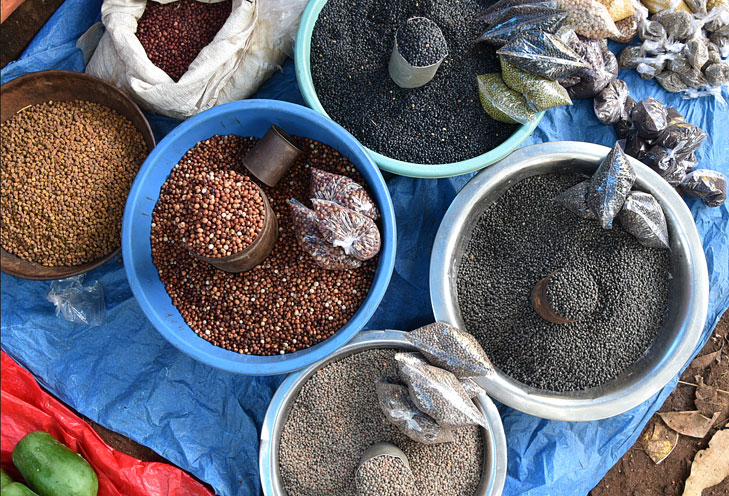
Sometimes you realise that we have so many facilities in the city, yet we still complain. We are more active about our rights and less attentive to our duties.
If we check the facts, haats are among the most important marketing channels in India and continue to play a vital role in the rural economy. There are nearly 45,000 plus haats across the country, catering to almost half of the rural population. Though often unnoticed by large financial institutions, these markets sustain livelihoods through indigenous systems of trust, communication, and social conduct.
As we walk further, we reach the cloth market. It is full of colourful fabrics. On closer observation, most of the cloth is machine-made. The visual language still reflects tribal aesthetics, but these are not handwoven textiles. Handmade fabrics have now become expensive and are available mostly in exclusive shops. This is the irony of time. Earlier, handloom was common in local markets, and machine-made cloth required a visit to the city. Today, the situation is reversed.
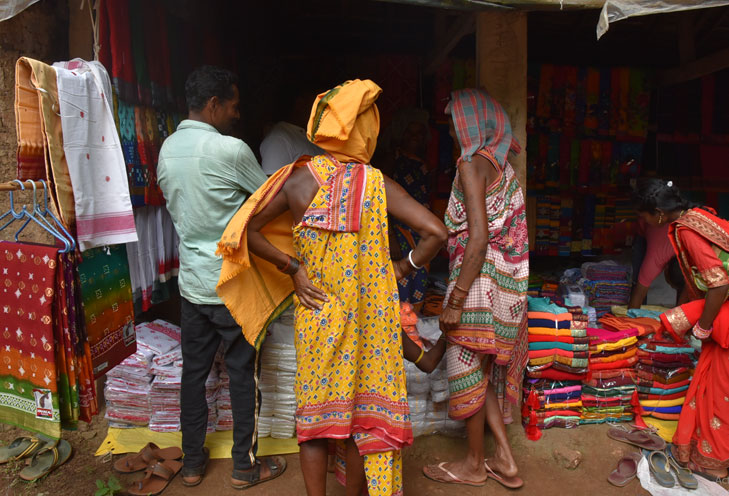
When people seek affordable and durable options, it becomes difficult to explain the value of handmade fabric. Standing there, we feel we are not in a position to advise people who already live simpler and more sustainable lives than we do.
A little further, we notice many women selling something from matkas. We learn that it is a local alcoholic drink made from mahua and rice. Men and women sit together, drinking from leaf donas. The atmosphere is calm and joyful. Under a tree, a group sings local songs. Nothing is loud, nothing overwhelming, unlike city pubs where conversation itself becomes difficult.
Nearby, a few goats quietly do their work, eating the discarded leaf donas. They too seem to be enjoying their weekly treat.
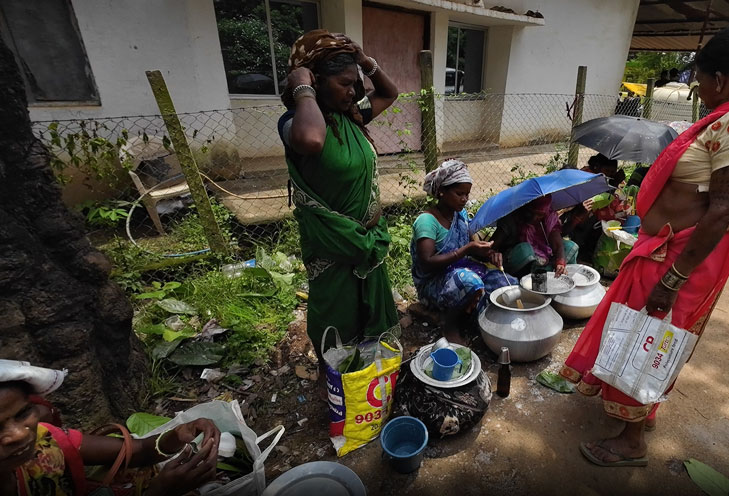
By around five in the evening, people begin to return home. Everyone carries bags, some on their heads and some in their hands. Many take local transport, while others begin walking. Merchants remove their canopies and count the day’s earnings.
The haat slowly disappears, leaving behind an empty ground, waiting for the next Tuesday.
~
Gaatha
India’s longest-running craft documentation project since 2009.
We have researched 250+ living craft traditions through field visits,
artisan interviews, and cultural study across India.
→ Explore our research archive at gaatha.org
→ Buy authentic Indian crafts at shop.gaatha.com