Indian Folk Theatre Masks: The Faces Behind India’s Ancient Storytelling
Masks have always reserved a position of reverence and storytelling within the Indian heritage, often found intertwined with various ethnic dances to portray a particular character or emotion. Masks are often depicted as something that hides an aspect of a person, however, in Indian folk culture, decorative and elaborate masks in classical or tribal dance reveals a character’s true identity or emotions. They tend to portray various emotions- love, anger, hate, fury, joy, fear, disgust, sorrow and exist on a plane of Indian culture that transcends caste, creed, and nationality. Along with representing religious totems of a particular place, it was used in the direct, indirect, or satiric depiction of various socio-cultural themes by enacting roles of different people or social concepts to emphasize societal wrongs. The mask of each place is unique in its iconography and symbolism.
On the fourth day of Onam, while the people of Thrissur are just beginning to wake up, a different kind of energy can already be felt at the Swaraj Grounds. Artists arrive early to prepare for their performances, moving about busily as the space slowly fills with excitement. Among the exuberantly dressed performers, flashes of yellow and red can be seen. Following the sounds of traditional percussion instruments like the thakil, udukku, and chenda being set up, one can find the most significant preparations of the day — the preparation of the Puli Kali performers. Artists with their bodies painted in bold shades of yellow, red, and black, broad belts of jingling bells around their waists, and adorning intricate masks complete with teeth, tongues, and facial hair to embody tigers, were moving about hurriedly.
By afternoon, after nearly five hours of meticulous preparation, the Puli Kali groups, or sangams,move across the four corners of Thrissur in a lively procession. They dance, pounce, and shake their bellies to the rhythm of drumbeats as they move through the streets toward Swaraj Round, Karunakaran Nambiar Road, Shornur Road, A. R. Menon Road, and M. G. Road. Wanting to reflect the wild and macho spirit of the force through the tiger, the performers depict beautiful and elaborate scenes of the tiger preying on another animal and the tiger then hunted by a hunter. Thousands of spectators follow the procession enjoying the performance, cheering on the dancers, and sometimes even joining in the festivities.
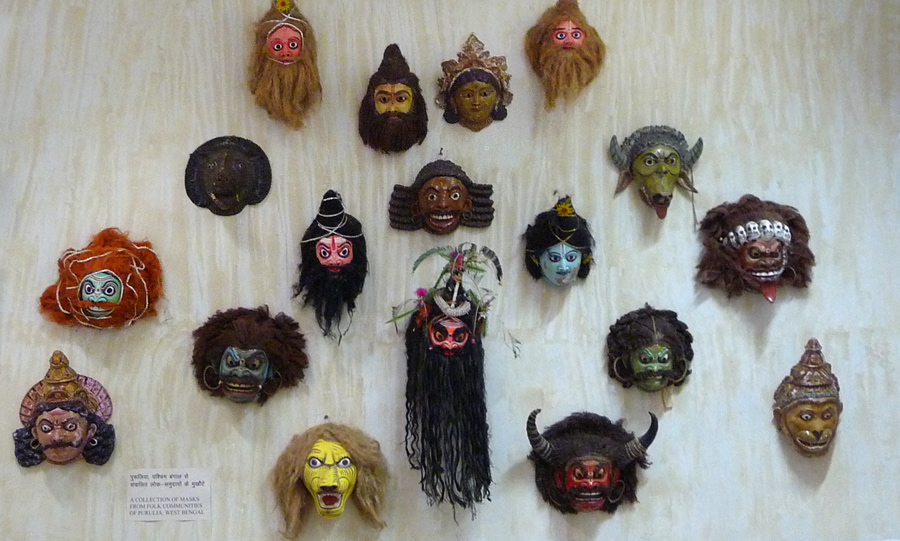
Around the same time each year, the preparations for Chaitra Parva in West Bengal, Jharkhand, and Odisha begin. People from various socio-economic backgrounds oversee the organization of the spring festival, striving to display elaborate performances devoted to Lord Shiva in his form of Ardhanrishwara. Performers can be seen getting their intricate makeup done, being put into their extravagant costumes, but one group of performers holds all the attention.one of the most significant aspects of the festival are The Chhau dancers, who practice the steps to the martial dance, donning the well-known Chhau masks that play a vital role in the religious ceremony. The Purulia Chhau of West Bengal, Saraikela Chhau of Jharkhand, and Mayurbhanj Chhau of Odisha, different in style, costumes and masks are bound together by their narrative, generally depicting the Hindu epics, Ramayana and Mahabharata, the Puranas, and even folk tales.
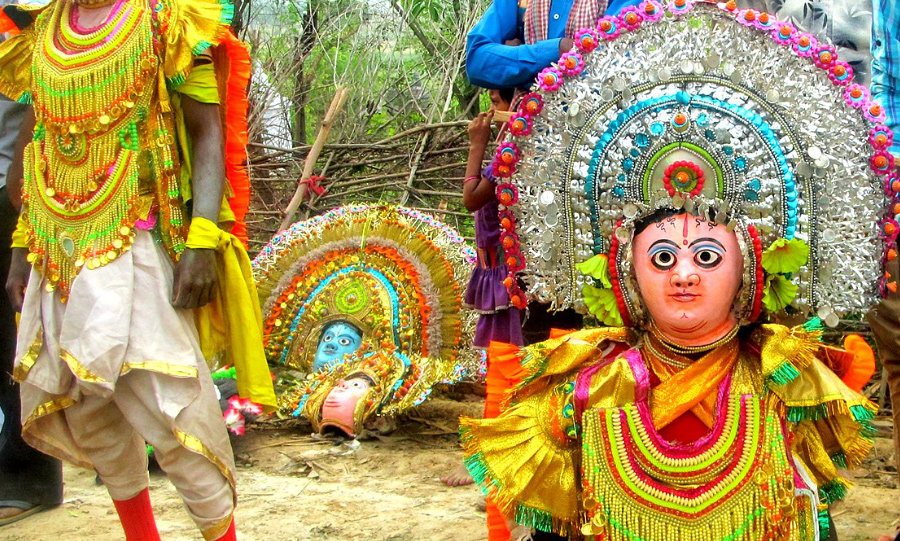
Made by artisans from the Sutradhar community, Purulia and Saraikela Chhau masks tend to be earthy and theatrical. Due to the Purulia Chhau performers originating from the indigenous communities of Mura, Bhumij, and Kurmi and no significant royal patronage are involved in their growth. They were able to retain their folk characteristics on their own and avoid any form of Sanskritization. In contrast, the Seraikela Chhau has a close association with the royal family through active engagement as performers and choreographers.
The masks prove to be the essence of this portrayal since they are drawn with the emotions the performers feel through the depiction, predominantly the Vir Ras (bravery) and Rudra Ras (anger). Since the central theme of this dance revolves around the depiction of the evil being punished through mythological stories, it ends with the evil powers being penalized while the righteous triumph. Chhau masks symbolize visual representations of the characters- Ratri, the night, with the eyes half-closed; Hamsa, the swan, with its long beak; or Krishna’s blue-tinted face. On the other hand, some masks maintain neutral expressions with exaggerated features to enhance the emotions portrayed through the movement of the dancers. Purulia Chhau masks are far more realistic than the Seraikela Chhau masks and depict a variety of demons and gods of the Hindu pantheon by etching grotesque facial expressions such as thick, bushy mustaches and protruding eyes and teeth and utilizing a dark yellow and bright orange to portray heavenly deities and stark black, green, or red colors for the antagonists. Its realism is evident in its definite display of all ten heads of Ravana and with the elephant trunk of Ganesha, complete with decorations of foil, beads, pith works, paper flowers, and feathers of birds.
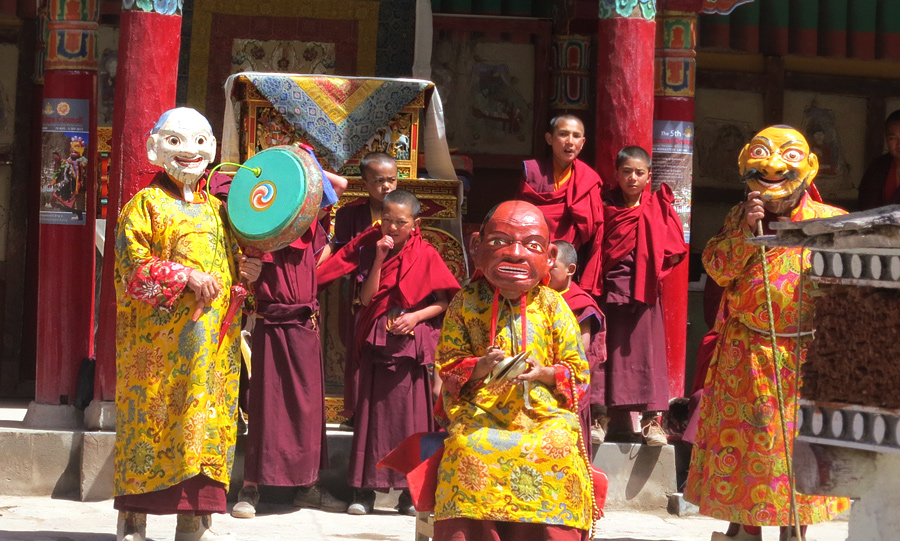
The monasteries of Lahaul, Spiti, Ladakh, and Kinnaur are brimming with excitement. In contrast to the usual swarm of people dressed in orange garments, this time of the year brings many more colours to the festivities. The Cham dancers, adorning brightly colored and intricately patterned masks made of wood, copper engravings, and paper mache, mill around preparing for their performances. The beautiful masks, accompanied by the booming sounds of drums and other percussion instruments, create a lively atmosphere. The audience wait in anticipation for the yearly representation of the combat between good spirits and evil demons, appeasing the deities warding off the evil.
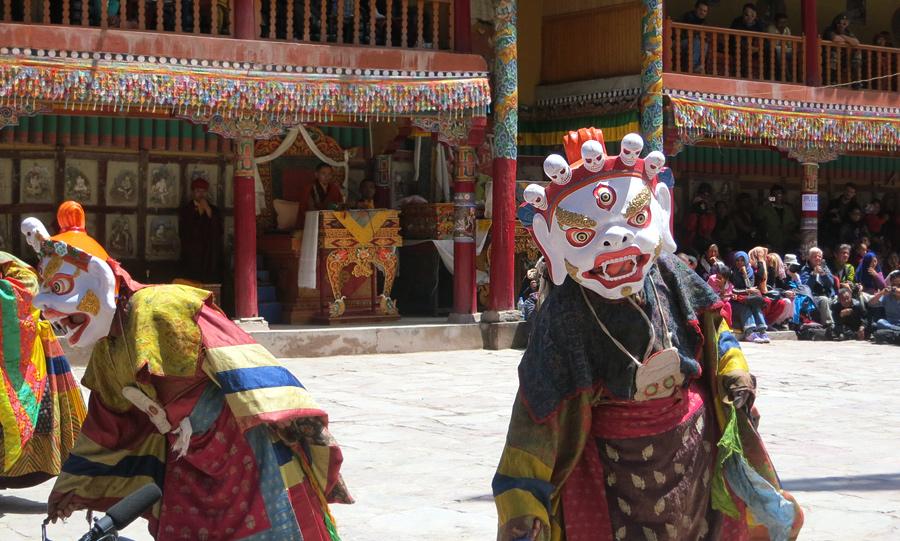
The Cham mask is an integral part of North Indian folk culture due to its utilization to portray larger-than-life characters with an amalgamation of themes, the most popular being the commemoration of Guru Padmasambhava. The mask dance, divided into two parts, honors and pays homage to the eight aspects of Padmasambhava, concluding with a performance of the Maha Dongcren, a horned masked figure, slaying and putting an end to the demonic force.
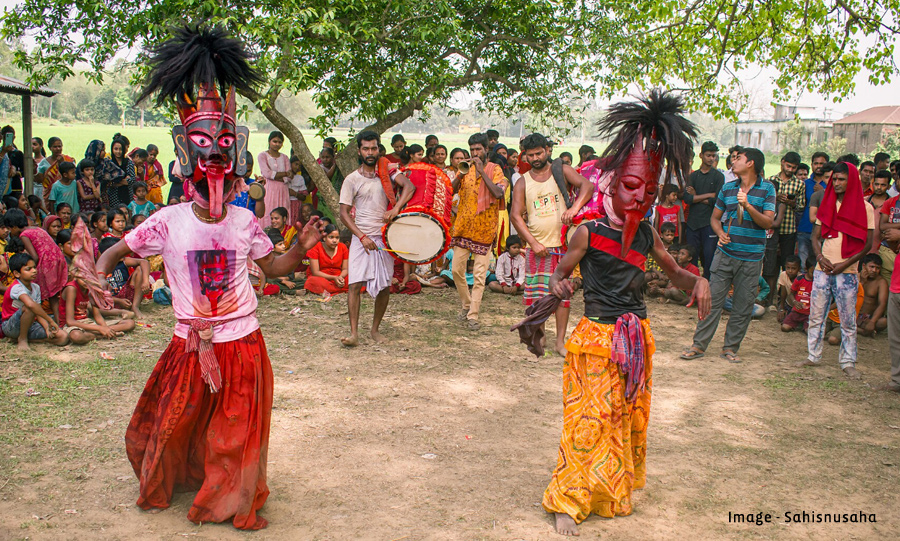
One of the many Indian festivals celebrated with the most incredible fervor is the Durga Puja. In the months of mid-April and mid-May, the remarkable mask dance, Gambhira, is performed to usher in the good forces and drive out the evil ones in the South and North Dinajpur districts of West Bengal. Shaped as a three-dimensional crown made of clay and wood of the neem and fig trees by the local Sutradhar community, the Chargog Gambhira masks are worn to worship Goddess Chandi and Goddess Durga in her Mahishsasurmardini form. By portraying Durga and Kali, the Gambhira folk dance narrates tales such as that of Shakti killing the buffalo-headed demon, Mahishasur.
A hundred kilometres away from Hyderabad, there is a place where Cheriyal masks and scrolls are still being painted, keeping the rich tradition alive. Cheriyal masks comprise wood, coconut shell, tamarind seeds powder, or sawdust decorated with vibrant reds and blues, and intricate jewelry to depict various gods and goddesses, brides and grooms, demons, and other figures from popular Indian myths. In contrast to most masks being used in ceremonies and performances, the Cheriyal masks are worn by wandering storytellers whole travel across villages to enact traditional stories of ancient India. These storytellers, carrying this folk tradition for over 800 years, are nomadic members of the Kaki Padagollu community in Telangana who intersperse their sessions with music and dance routines aided by elaborate masks depicting each character along with large scrolls narrating the tale through paintings, particularly from the village of Cheriyal. The Cheriyal masks and scrolls accompanied by their distinctive characters and expressions are a unique cultural icon of Indian folk culture.
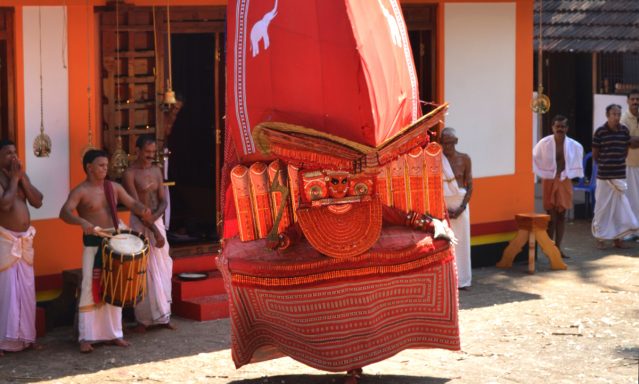
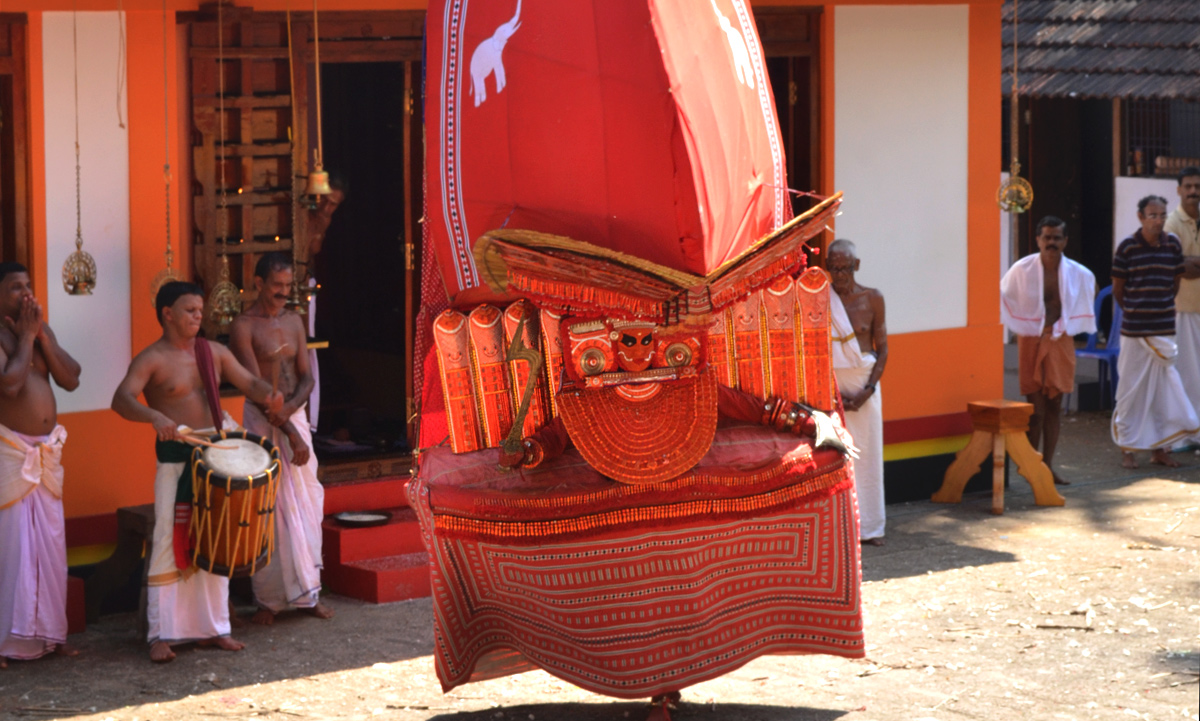
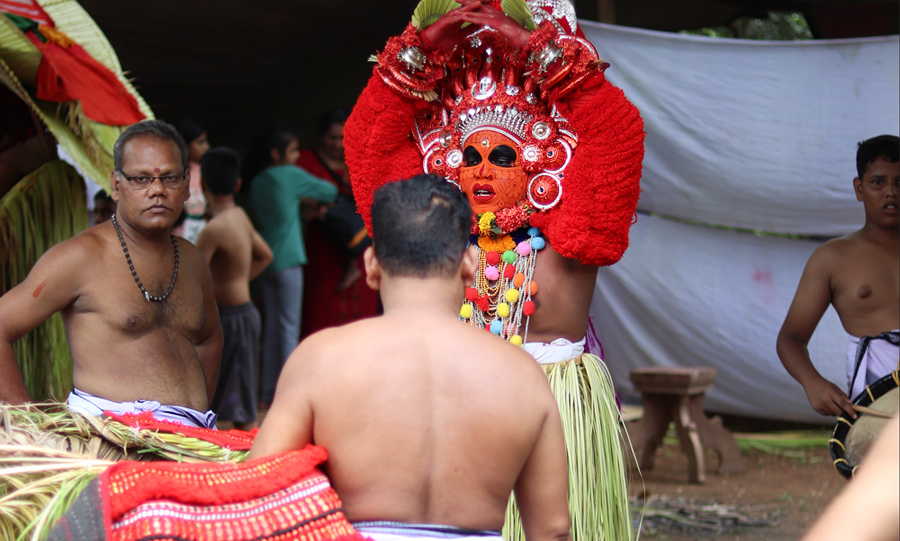
With the onset of October comes the beginning of the Theyyam festivities in Kerala, with the people prepared to host the ritualistic dance worship. With elements of tribal and primitive religion encompassed in this folk practice, Theyyam worships the Mother Goddess (Bhagavathi), who has different forms, along with ghosts and spirits. The performers who are from lower castes and communities such as the Malayan, Velan, Vannan, and Peruvannan have the right to perform at an “upper-caste” setting such as a kshetram (temple) or a kaavu (sacred grove) to take on the role of a God/Goddess momentarily. When Theyyam came into practice, untouchability was a pretty prevalent concept, but people would fall to the performers’ feet and seek their blessings. The Theyyam masks, with their bright red color, bulging eyes, and intricate mukhathezhuthu (face painting), give the dancer a captivating devilish look. These masks are accompanied by around 30 feet tall headgear decorated with coconut palm leaves, ornaments, jet black flowing hair, and a daunting 16 torches attached to the performer’s body continuously filled with oil. The Theyyam is reveled as a medium of access to the gods on earth and a protest against the caste system implemented by the Namboodiri (Brahmin).
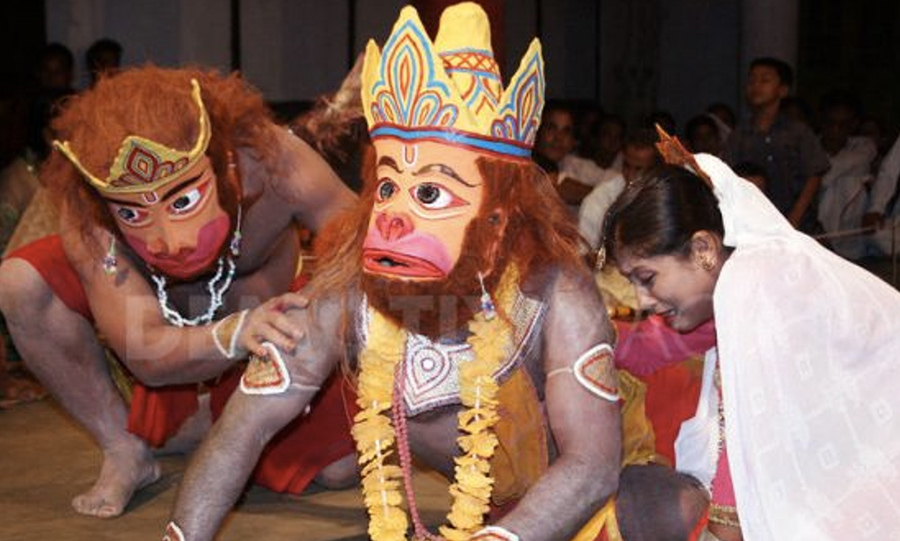
The November of every year brings with it one of the most extravagant festivals of Assam, Ram Mahotsav. With mask masking flourishing in Majuli since the 16th century, masks have become an integral part of Assamese folk festivities. Home to Ras Leela, Ankia Nat, and Bhaona, this part of the Assamese eclectic cultural composition attracts national and foreign tourists alike. Using three different kinds of masks- Mukha (face mask), Lotokai (face masks that allow movement of eyelids and lips), and Bor (mask covering the upper body with jaws, hands, etc.), tales of Ramayan and Mahabharat are depicted particularly revealing the impact of the Vaishnav culture. These masks are prevalent to their lightweight nature, created by a clever mixture of clay, bamboo, or cloth.
Similarly, masks have been used in many folk traditions of places across India, such as Krishnattanm and Kummtikalli of Kerala, Therukoothu and Puliyattam of Tamil Nadu, Bagh Nritya and Shahi Jatra of Orissa, and many others considering the immense diversity that persists in India, and that makes up such a significant part of our culture.
~
Gaatha
India’s longest-running craft documentation project since 2009.
We have researched 250+ living craft traditions through field visits,
artisan interviews, and cultural study across India.
→ Explore our research archive at gaatha.org
→ Buy authentic Indian mask at shop.gaatha.com