
Khichdi ~ Indian Words & Their Origins
Just as khichdi is cooked slowly, with many ingredients coming together, words too begin their journeys in similar ways. As people travel, they add their own styles and twists. Sometimes, we no longer recognise where a word first came from. Through this series, we are serving a few such khichdis—stories of words shaped by time, travel, and many hands.
Candy | Khand
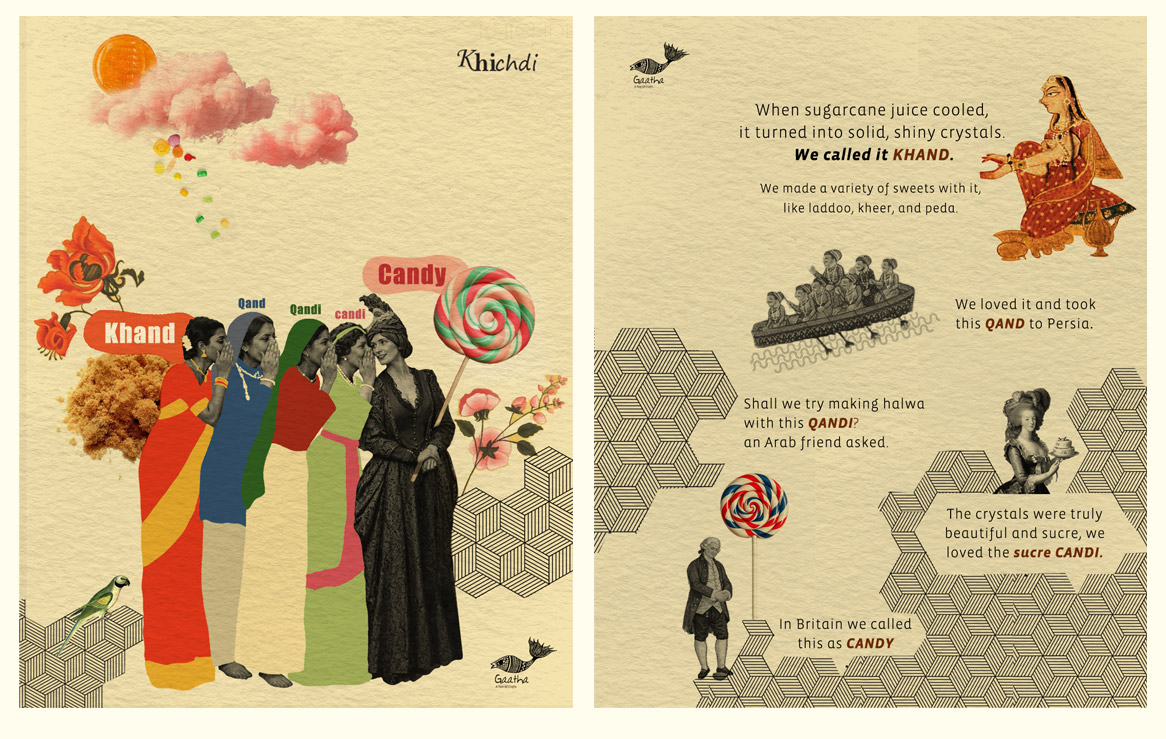
Nowadays, I am trending again. You know me as brown sugar or khand.
My journey began long ago, when sugarcane was boiled slowly and with care.
As the juice cooled, it transformed into solid, shiny crystals. That was me.
When travellers arrived, they loved my sweet nature.
And since I too loved to travel, my journey continued.
First, I went to Persia, where I became QAND, with a gentle twist.
In the Arab lands, I was called QANDI.
The real transformation came when I reached France, where they named me SUCRE CANDI.
By the 13th century, the English embraced me simply as CANDY.
Today, my original form may have changed,
but my many twisted names still melt sweetness on the tongue.
~
This campaign is titled “Khichdi.”
Just as khichdi is cooked slowly, with many ingredients coming together, words too begin their journeys in similar ways. As people travel, they add their own styles and twists. Sometimes, we no longer recognise where a word first came from. Through this series, we are serving a few such khichdis, stories of words shaped by time, travel, and many hands.
Duangree | Dungri
Nowadays, the current generation considers me cool.
I’m sure many of them believe I was born in the mind of a Western fashion designer.
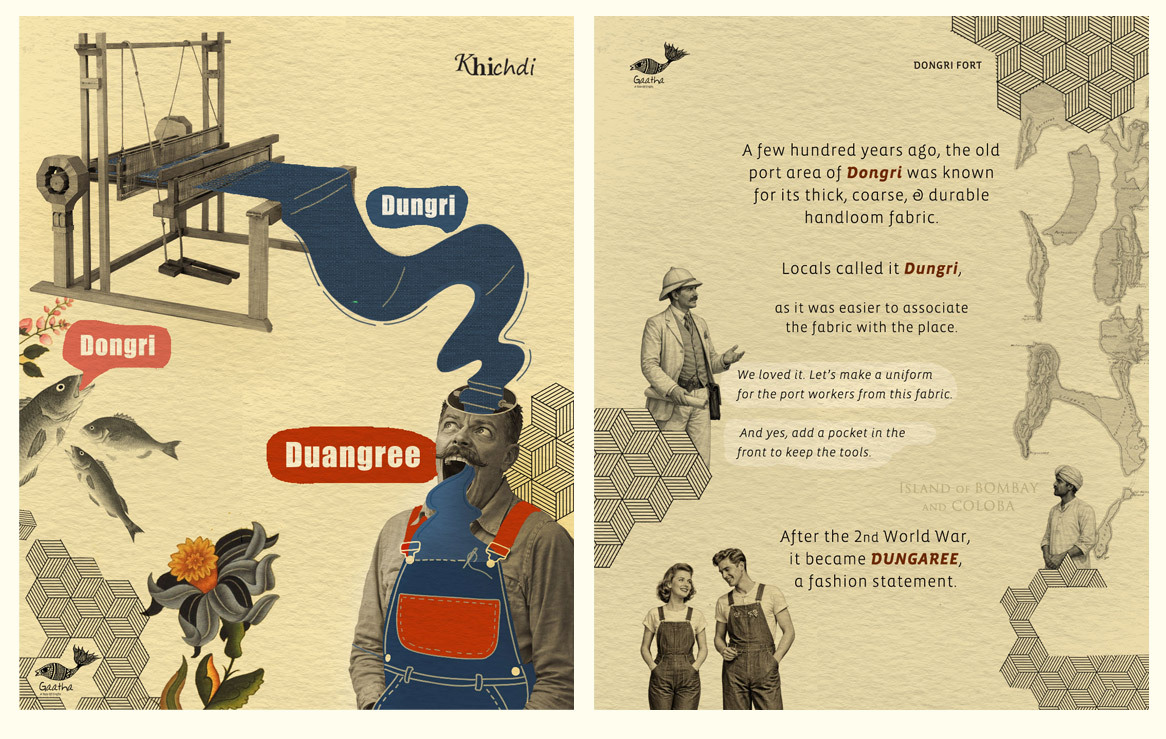
But my journey began long ago, when humble handloom weavers wove thick, coarse, and durable fabric here in India, near Bombay, what we now call Mumbai. There was a small port village known as Dongri, and locally, the fabric was called Dungri.
Just like fabric from Banaras is called Banarasi, and fabric from Maheshwar is called Maheshwari, this fabric took its name from its place.
The British authorities admired my durability and practicality. They turned me into a uniform for port workers, adding a few pockets in the front to hold tools and other necessary objects.
The real twist in my life came after the Second World War. I stepped out of the ports and onto the streets, becoming popular as everyday fashion. My name, too, evolved with time, transforming from Dungri to Dungaree.
So next time you buy me, remember to give a little credit to Dongri too, my birthplace.
kedgeree | Khichdi
Most Indians grew up loving me.
I am wholesome, quick to prepare, and open to endless variations, toor dal, moong dal, or chana dal.
You can always add a twist with different spices and vegetables.
Potato and onion are perhaps my favourites.
I am khichdi.
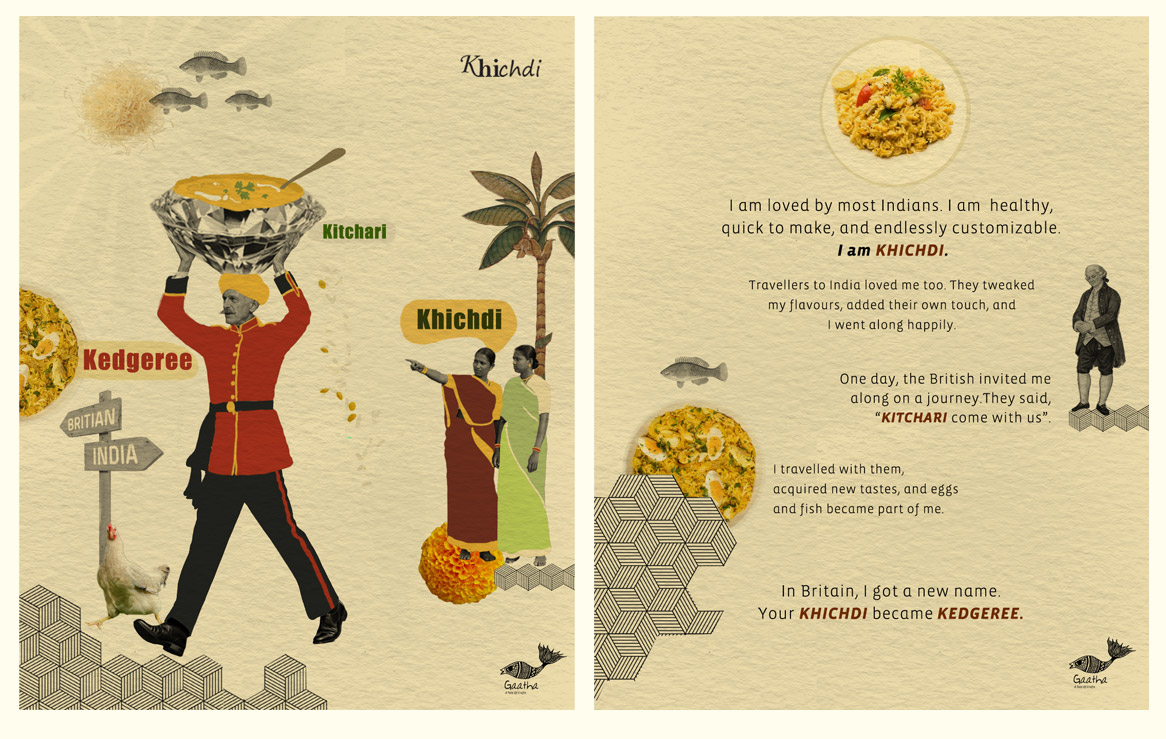
I am not just loved by locals. Travellers who came to India embraced me too.
They played with my flavours, added their own touches, and I welcomed the change.
For ages, I lived life the same way. Then one day, the British invited me on a journey.
They said, “Kitchari, come with us to Britain.”
Britain? I had never imagined travelling abroad.
Still, I crossed the seas and reached Britain.
I met new people and discovered new tastes.
Eggs and fish were added to me. I remembered that even Mughal king Aurangzeb once added fish and boiled eggs to me and called it Alamgiri Khichdi.
I was always open to change.
The real twist came with my name.
Soon Khichdi became Kitchari, and finally, I turned into kedgeree, with the “d” staying silent.
Bandana | Bandhana
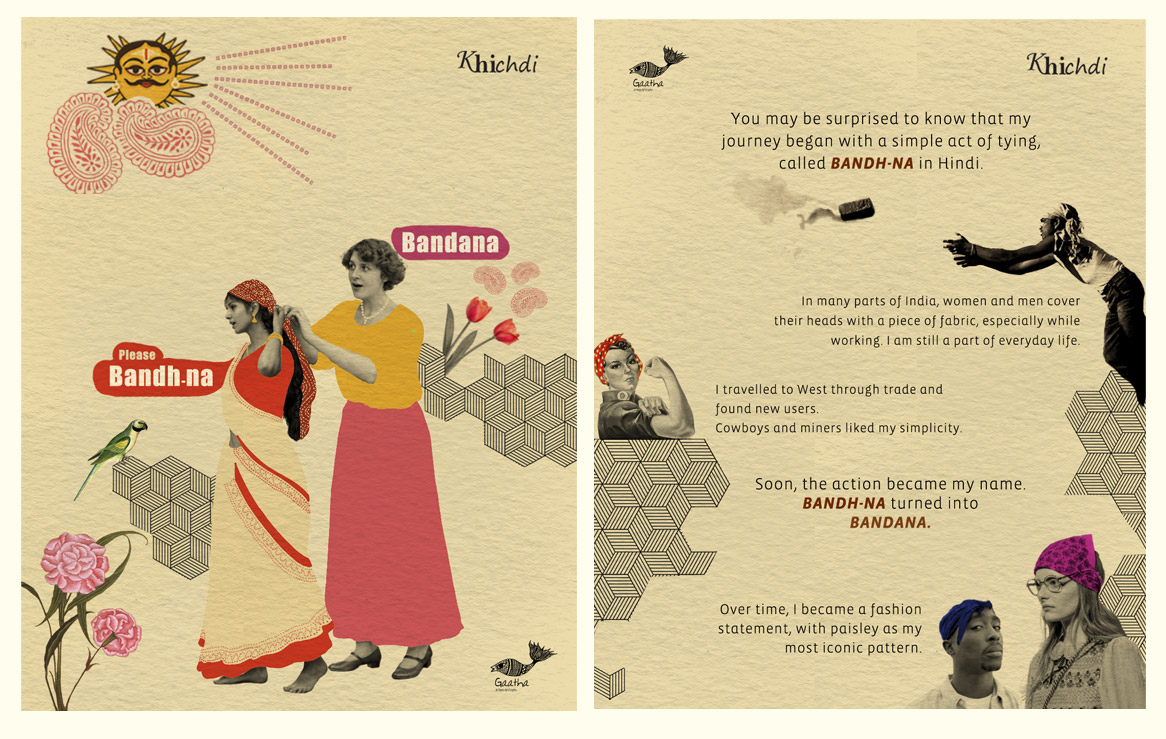
I am just a square piece of fabric, yet I am always in fashion. Today, people call me bandana.
My name comes from the Hindi word bandh-na, meaning “to tie.”
In India, especially while working in farms, people have long tied pieces of fabric around their heads. That’s where my journey began.
Some travellers found me interesting and soon discovered my practical value. In the 18th century, they carried me to the West. Cowboys and miners began using me to protect themselves from dust, sun, and wind.
Later, in the late 19th and early 20th centuries, I was often tied in red, becoming a symbol of solidarity and resistance in labour movements.
Over time, I moved from function to fashion. Designers started experimenting with different fabrics and patterns, and soon I found myself walking fashion runways, evolving into a global style statement.
So the next time you wear a bandana,
please अच्छे से बाँधना.
I don’t give a damn
We don’t give a damn about captions.
But we do care about those who like to know the truth.
~
Now, here’s the story.
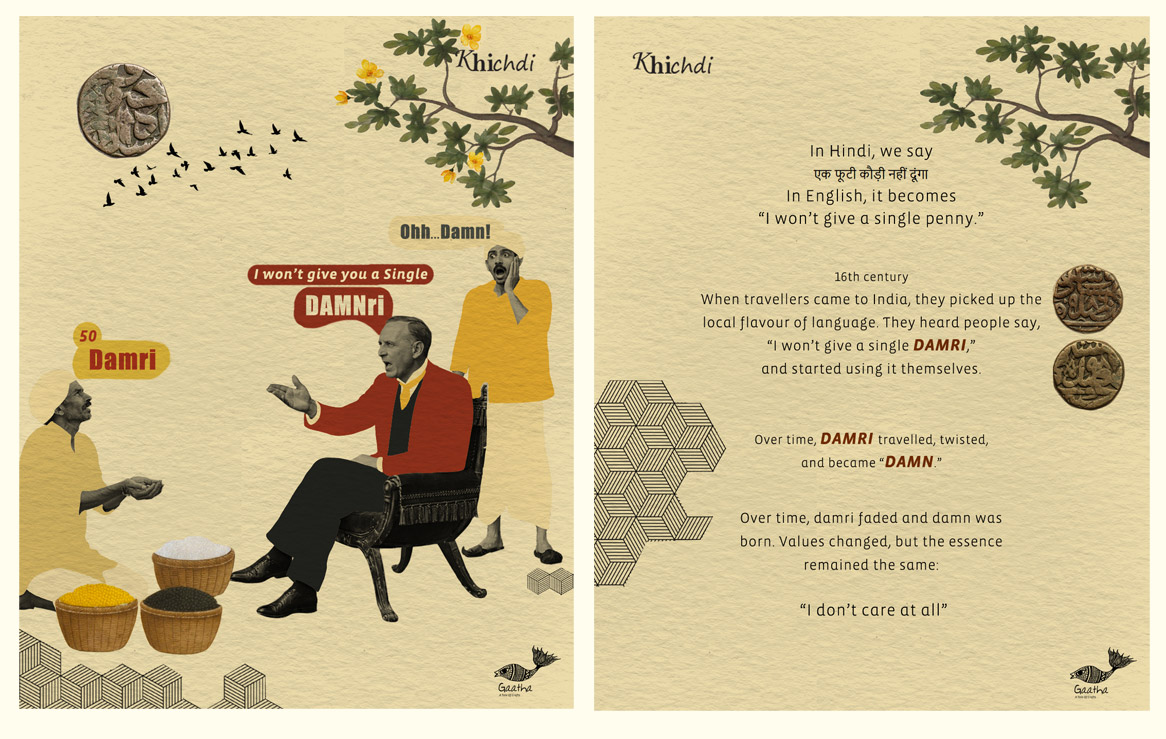
Go back to the 16th century, when a small copper coin called damri was used in India. Introduced under Sher Shah Suri, it was of very low value. Saying “I won’t give a damri” meant something wasn’t worth even the smallest amount.
Travellers and traders picked up this local expression and started using it themselves, saying, “I don’t give a single damri,” basically meaning do whatever you want, I don’t care.
With time, damri faded, currencies changed, but the phrase survived. With a small twist in pronunciation, damri turned into damn.
Today, it lives on as slang. But behind it is a story of history, travel, trade, and how language quietly carries memories forward.
Also Explore
KNOW YOUR NATIVE (INDIAN TRIBE) – Click here
UNCOMMON SENSE – Click here
Gaatha
India’s longest-running craft documentation project since 2009.
We have researched 250+ living craft traditions through field visits,
artisan interviews, and cultural study across India.
→ Explore our research archive at gaatha.org
→ Buy authentic Indian crafts at shop.gaatha.com